
Author Archives: Jarryd Sinovich
Airbus develops solution for airlines to use their widebody aircraft for pure cargo operations during the COVID-19 pandemic

Toulouse, 30 April 2020 – Airbus is developing a modification for A330 and A350 family aircraft which will enable airlines to install freight pallets directly onto the cabin floor seat tracks, after removal of the economy-class seats.
This solution will help with the airlines’ own business continuity, and also alleviate the global shortage of ‘belly-freight’ air cargo capacity due to the widespread grounding of long-haul aircraft in the context of the COVID-19 pandemic. Additionally, it helps the industry to address the high demand for humanitarian flights to transport large quantities of medical equipment and other supplies rapidly over large distances to where they are needed.

Compared with loading cargo onto seats, this Airbus solution facilitates easier and quicker loading and unloading operations, as well as reduced ‘wear & tear’ to the seats themselves. Other important benefits include the added security of robust fire protection, and the 9g load restraint capability to prevent anything from shifting in flight.

The modification is packaged for operators as an Airbus Service Bulletin (SB). Under this arrangement Airbus defines the engineering workscope and also manages the process for obtaining the one-time certification from the European Union Aviation Safety Agency (EASA).

Its scope includes the removal of the seats & IFE (Inflight entertainment), installation of cargo pallets and associated safety equipment – and also the re-installation of the original passenger cabin elements for reverting back to passenger operations. The SB approach will also be valid beyond the COVID-19 pandemic.
SAAF C-47 77 years and counting!

Originally written by Dean Wingrin in 2015 for the 80th celebration. Edited by Ryno Joubert in 2020 for the 85th anniversary!
Known by such names as the Dakota, Dak, Gooney Bird, TurboDak and even Vomit Comet, 2020 commemorates the 85th anniversary of the first flight of the venerable Douglas DC-3 / C-47 forbearer, the Douglas Sleeper Transport (DST) passenger airliner which evolved into the 21-seater DC-3, on 17 December 1935.

According to The Dakota Association of South Africa, the DC-3, as the DST was to become known, was the first commercial transport aircraft capable of making a profit from carrying passengers only. Most aeroplanes of its vintage were being subsidised by the carriage of mail and freight, whilst air-travel was only for the daring and the affluent.

With the war clouds of World War Two looming on the horizon, the civilian DC-3 was developed into the military C-47 Dakota, powered by two Pratt and Whitney radial engines, with an enlarged cargo door and strengthened fuselage. Along with the Jeep and the Bazooka, General Patton announced it to be one of the major contributors to the victory in the Second World War.

The C-47 was capable of transporting 10,000 lbs (4 536 kg) of cargo or 27 passengers in permanent seats or configured for 28 paratroopers. By the time the last Dakota left the assembly line in 1946, a total of 10 655 DC-3, C-47 and associated variants has been produced.
The Dakota has seen over 77 years of military service in South Africa. The aircraft entered SAAF service in 1943 when the RAF passed a number of their fleet onto the SAAF. By the end of World War Two, a total of 84 Lend-Lease Dakotas had been transferred to the SAAF.

At the cessation of hostilities in 1945, a large number of surplus Dakotas were disposed of, including transferring some to South African Airways. The survivors of the SAA fleet later found their way back to the SAAF in 1971.

When sanctions were imposed on South Africa in the mid-70s, a number of Dakotas were purchased from various sources to supplement those still in SAAF service. In total 16 were added to the SAAF strength. At one stage, the SAAF had the distinction of operating the largest remaining fleet of Dakotas in the world.

The Dakota performed yeoman service during the Border War from the 1960’s through to the end of hostilities in 1988, performing such roles as troop transport, resupply, medical evacuation, Para -trooping and other ancillary activities. Her toughness stood her in good stead.
During one particular mission near the South West African/Angolan border on 1 May 1986, a Dakota of 44 Squadron, commanded by Captain Colin Green, was hit by a SAM-7 surface-to-air missile while transporting high-ranking officials. The missile strike resulted in the loss of most of the rudder and a large proportion of the elevators. The pilot managed to keep the aircraft in the air and on course to AFB Ondangwa, where it was landed safely with no injuries to its crew or passengers.
Following the end of the Border War, the number of squadrons operating the Dakota was reduced, along with the disposal of airframes.


The early 1990s saw a large number of Dakotas upgraded to ‘TurboDak’ configuration under Project Felstone. This conversion involved replacing the piston engines of the classic Dakota with two Pratt and Whitney PT6A 65R turboprop engines, lengthening of the fuselage and the installation of modern avionics. Thereafter, the aircraft were re-designated as the C-47TP TurboDak. Between 1989 and 1994, twelve aircraft were converted to C-47TP standard.


35 Squadron has been associated with the Dakota since 1985, when several C-47s were acquired to replace the recently retired Avro Shackleton MR3 in the maritime surveillance role.

When 25 and 27 Squadrons were amalgamated with 35 Squadron on 31 December 1990, additional Dakotas were utilised for air transport, leaving the Squadron responsible for both the Maritime and Transport roles. The classic piston-engine workhorses were finally withdrawn in September 1994 and replaced with the modified turbine engine C47TP Dakota.

Apart from the Squadron’s maritime role and transport role (consisting of Para- trooping, target towing, scheduled passenger services, aero medical evacuation and logistical support), the Squadron also performs other support functions. These include electronic intelligent gathering, tactical image (photo) reconnaissance and numerous training functions, such as navigator and telecommunication operator training.


Airforce Day 2020, AFB Swartkop

Airforce Day 2020, AFB Swartkop
As a result of rationalisation that has taken place over the last few years, only eight C-47TPs remain in SAAF service, where they serve with 35 Squadron in Cape Town in a variety of roles. The variants operated are: five maritime surveillance configured aircraft, two in transport configuration and one as an Electronic Warfare (EW) training platform.

The SAAF has the distinction of operating the largest remaining fleet of Dakotas used by the military in the world:
Colombia: 6 (FAC1654, FAC1658, FAC1667, FAC1681, FAC1683, FAC1686)
Guatemala: 2 (FAG530, FAG590)
Mauritania: 1 (5T-MAH)
Thailand: 7 (RTAF46151, RTAF46153, RTAF46154, RTAF46156, RTAF46157, RTAF46158, RTAF46159)
South Africa 35 Squadron: 8 (6814, 6825, 6828, 6839, 6852, 6854, 6885, 6887)
Alaska’s North Slope Borough Now Flies a PC-24 Air Ambulance

Operated by the North Slope Borough Search and Rescue Department (SAR) in the northernmost region of the United States, the PC-24 provides basic medical care for 9,800 residents across a territory of 95,000 square miles (246,000 square kilometres). Outfitted with tandem LifePort™ AeroSled™ stretchers and five passenger seats, it is the fourth PC-24 to be delivered in a medevac configuration.
The town of Barrow, Alaska, also known as Utqiagvik, is located at 71 degrees north latitude. The average temperature in mid-January is –14 degrees Fahrenheit (–26 degrees Celsius) and the sun does not rise completely above the horizon until early February. This region, with its exceptionally harsh conditions, will be the new home for the Super Versatile Jet.

Multi-mission capability
The SAR Department is responsible for delivering basic medical care to all North Slope Borough residents. The team performs medevac operations, search and rescue and other emergency missions.

In addition to the PC-24, which replaces an older light jet, SAR currently operates two helicopters and a fixed wing turboprop aircraft. All are capable of day, night, visual or instrument meteorological flight conditions in a medevac context. Many flights are operated from snow and ice packed runways with paved, dirt, and gravel surfaces – conditions for which the PC-24 was specifically designed.

Unique characteristics
April Brooks, Director of North Slope Borough Search and Rescue, explained the reasons which motivated the choice of the PC-24: “The PC-24 is a gamechanger when it comes to fast, efficient transport of critical patients across vast distances in our extremely harsh environment. Its unique cargo door, large cabin and ability to safely operate from short, unpaved runways make it ideally suited to our needs.”

At the handover ceremony held at Pilatus’ US subsidiary, Pilatus Business Aircraft Ltd in Broomfield, Colorado, North Slope Borough Mayor Harry K. Brower Jr. said: “We are delighted we can now offer residents a new level of capability to enhance their safety and well-being. In this region, fast, efficient, high quality medical care is absolutely essential, and the PC-24 will enable us to fulfil every aspect of that commitment.”

Thomas Bosshard, CEO of the Pilatus subsidiary, presented the keys to Mayor Brower and commented: “We are proud of the role our PC-24 will play in supporting the residents of North Slope Borough and the SAR team in the execution of their missions. We are very pleased to see such high demand for the PC-24 as a medevac platform, in addition to its popularity as a business jet. This is exactly the type of versatility we envisioned when we began designing the PC-24 – and now it is a reality.”

The first fully modernized Tu-160M missile carrier bomber performs its maiden flight

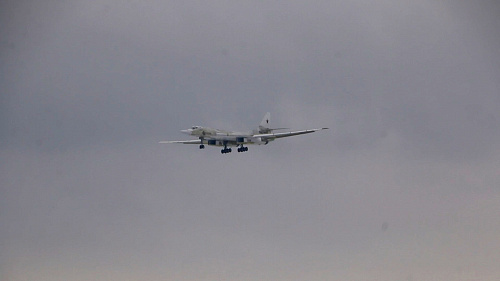
On February 2, 2020 Tupolev PJSC, as part of the United Aircraft Corporation, announces the maiden flight of the first fully modernized Tu-160M strategic missile carrier bomber.
On February 2, 2020 the maiden flight of the first prototype of fully modernized Tu-160M missile carrier bomber, which is based on the combatant Tu-160, took place at the airfield of KAZ named after S.P. Gorbunov – Tupolev PJSC affiliate. The aircraft was piloted by the crew under command of Anri Naskidyants, a test pilot of Zhukovskiy Flight Test and Development Center. The flight altitude was 1500 meters and flight duration was 34 minutes.
During the flight, necessary tests of upgraded systems and equipment installed as part of full modernization of the aircraft were conducted. According to the crew report, the flight was running in the normal mode; systems and equipment have operated without concerns.
Within the framework of full modernization, Tu-160M was equipped with new flight control and navigation equipment, airborne communications system, control system, radar, electronic countermeasures system. The performed upgrading resulted in the considerable enhancement of the total effectiveness of the aircraft system while in the intended use.
The first Тu-160M prototype was built as part of the extensive upgrading program of combatant aircraft systems of strategic and long-range aviation, which is currently carried out by Tupolev PJSC.
A pair of TU160s made a friendly visit to South Africa in October last year.
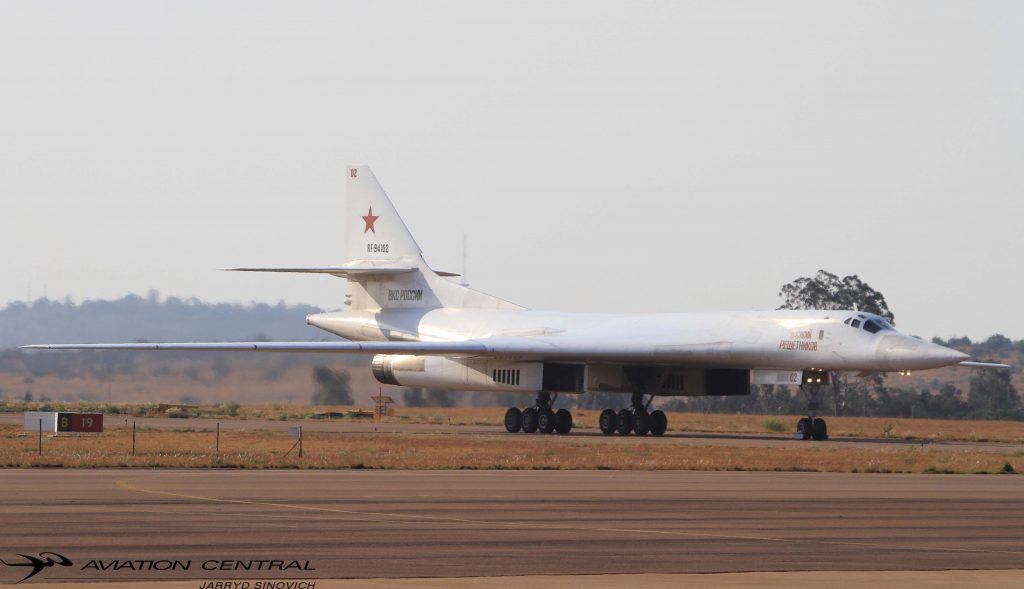
October 2019
First female pilot of Niger trains at LRAFB, USA

Capt. Ouma Laouali, the first female pilot in the Nigerien air force, and U.S. Air Force 2nd Lt. Amy Miyajima, C-130 Hercules student pilot, listen to their instructor during a lesson at Little Rock Air Force Base, Arkansas, Dec. 4, 2019. Laouali accomplished the goals she set to achieve — becoming the Nigerien air force Intelligence, Surveillance, and Reconnaissance Squadron Operational Detachment commander — while facing many challenges during her 2,600 flying hours as a combat tested pilot. (U.S. Air Force photo by Airman 1st Class Jayden Ford)
LITTLE ROCK AIR FORCE BASE, Ark. —
Capt. Ouma Laouali, the first female pilot in the Nigerien air force, recently accomplished the next step in her pilot career April 22, 2020, by completing her training to become a C-130 Hercules pilot in the C-130 Formal Training Unit’s six-month international pilot training program here at Little Rock Air Force Base, Arkansas.
The 314th Airlift Wing, in close partnership with the 189th Airlift Wing, trains more than 1,200 students a year. Approximately 150 of those students come from countries around the globe to become combat-minded C-130 Hercules crew members. Laouali is one of these international students and is a pioneer in the history of her country’s air force.
According to Laouali, her interest in aviation began as a child while chasing planes overhead, imagining what it would be like to be in the sky. During her 10-year career, she has flown aircraft such as the Cessna 208 Caravan and the Diamond DA42.
“What’s interesting about flying is to be up in the sky like a bird, and getting to see the incredible view that is not given to anyone else besides a pilot,” Laouali said. “There is nothing but open sky in front of you and you see how big the world really is.”
Becoming a pilot proved to be no easy task for Laouali – the pressure of setting a good example for the women who might follow her provided a constant reminder for her to try her hardest at every challenge along the way.
“Becoming a pilot made me feel very proud,” Laouali said. “At the same time, it put a weight on my shoulders because I knew I had to perform at my best for the women who will follow me. I wanted to set a good example so they would have the chance to prove themselves too. I feared that if I failed, everyone would remember that a woman failed and people might hesitate to give another Nigerien female pilot a chance.”
Laouali accomplished the goals she set to achieve: becoming the Nigerien air force Intelligence, Surveillance, and Reconnaissance Squadron Operational Detachment commander — while facing many challenges during her 2,600 flying hours as a combat tested pilot— proving to everyone that women are capable of doing the same thing anyone else can, she said.
“She is a pioneer in every domain,” said Forces Armées Nigeriennes Col. Amadou Moctar, Nigerien Air Base 201 commander. “She has been flying with the other crew members and they don’t look at the fact that she is a woman — she is a pilot — performing just as a good as the others.”
Her participation in the course marked the first time Laouali trained with the U.S. military – learning to be a combat-capable pilot of a C-130 Hercules.
“This is the first time I’ve trained on a U.S. base,” Laouali said. “It has given me the opportunity to see how the U.S. Air Force operates. The most important part was that there were other female pilots here. I felt like I could talk to these women and we could share and learn from our experiences.”
The opportunity for the C-130 FTU to train Laouali – along with all other international students –strengthens our strategic and international relationships with countries across the globe.
“We can show our commitment to our partnerships by training together,” said U.S. Air Force Col. Stephen Hodge, 314th AW commander. “The interoperability and the opportunities to train together now will pay off in great dividends if we go into a potentially hostile or contested environment together in the future.”
Upon completion of her training here, Laouali brings with her the knowledge of how to employ the C-130 Hercules as a tactical weapon with honed abilities as a Herk pilot — moving troops and supplies throughout the Nigerien air force’s large area of operations, as well as assisting with regional peacekeeping operations.
“I look forward to possibly becoming an instructor and I am ready to grow as a C-130 pilot,” Laouali said. “I have already seen what the plane can do, l know the plane’s full capabilities and I have the experience to use those capabilities if they are needed in the future.”
Laouali hopes that this accomplishment inspires other females to set their own goals and achieve them. She has always aspired to be the reason another young girl from Niger makes their own dreams come true — just as she did.
SAAF C130 with a Kill

History of the SAAF C-130 with a “kill”: 408
This C-130B was first delivered to the USAF as 58-0731 in 1959, being converted to WC-130B for the weather service in 1970. Reverted to USAF operation as a C-130B in 1982 and donated to South Africa in 1996, where she still flies with 28 Squadron as 408.

USAF incident in 1966:
On 12 January 1966, in Vietnam, 58-0731 (now 408) was with the USAF 463rd Troop Carrier Wing at Mactan. It flew into Ca Mau airfield taking fuel to the Special Forces team stationed there. Just after landing and opening the aft doors the base came under sustained Viet Cong (VC) attack and the Green Berets on the ground radioed to tell them to take off ASAP. But “Wendy” Moser said “Let’s drop the bladders on the roll and keep going. We dont want to take a hit with all the fuel on board.” They taxied and pushed the fuel bladders out of the back of the airplane. As soon as the last bladder was off, Moser taxied the airplane to the end of the runway and wheeled around into takeoff position.
As as they prepared the takeoff roll, someone noticed a figure on the runway just past the area where they had off-loaded the fuel. The crew noticed that the figure had a gun, and it was pointed at them. They saw him open up, shooting into their direction, although none of the rounds appeared to strike the airplane. Then the figure did a strange thing, he jumped onto a bicycle and began pedaling down the runway as hard and fast as he could.
All four men in the cockpit agreed that they must get the VC. Moser released the brakes and the C-130 hurtled down the runway. When the airplane reached flying speed, Moser held it down and aimed at the fast-pedaling VC. Then the crew heard a “BRRRRRRRR” as a prop caught the VC and splattered him all over the side of the airplane. Moser let the airplane become airborne and came back around over the runway to see what they had done. They flew low down the runway and could see the remains of the chopped-up VC and his bicycle.
After landing at Tan Son Nhut, everyone stood around the front of the airplane and apologised to the crew chief for the damage done and for the mandatory engine change.
After that they put a sticker of a person on a bicycle under the pilot’s window as a kill marking.
From the book “Trash Haulers” by Sam McGowan.

58-0731 (408) in NOAA service:
“Despite the damage and death caused by Hurricane Camille in 1969, there was one positive side-effect: she was a wake-up call to Congress. As a result, $8-million was appropriated to obtain more aircraft for the weather recon fleet, and upgrade all of them with state-of-the-art equipment. The Air Force dubbed the effort Project “Seek Cloud”.

Under Project Seek Cloud, twelve 1958-series C-130Bs were obtained from PACAF. They were old, and some were not in great shape, but a tired C-130 is still the equal of almost any other airplane. All twelve were modified for weather reconnaissance at WRAMA in 1970-71 with the installation of the Seek Cloud equipment suite. None of them were configured for atmospheric sampling.

Only eleven of these B-models kept their blue suits, however. 58-0731 was given a temporary duty assignment to the civilian sector, with NOAA’s Hurricane Research Division. It was first re-numbered N6541C, then N8037, and was nicknamed NOAA’s Ark. It served NOAA proudly for eleven years as a hurricane research aircraft. Re-converted to transport in 1981, she then served with the Texas, Ohio, and Kentucky Air National Guards before retiring in 1992. She was later donated to South Africa…”

Source: “Whiskey-Charlie!” by Tom Robison
Cessna SkyCourier takes next step toward first flight with ground engine tests

Aviation Inc. announced it has successfully completed initial ground engine tests on the prototype Cessna SkyCourier twin utility turboprop featuring Pratt & Whitney Canada PT6A-65SC engines. These ground engine tests verified the functionality of the fuel system and engines, as well as the interface with the avionics and electrical systems.
“The successful engine run tests are a pivotal step toward proving the maturity of the aircraft and its systems as we prepare for the first flight,” said Chris Hearne, senior vice president, Programs and Engineering. “We continue to meet each important milestone in our development schedule, and we look forward to having an outstanding aircraft for our customers.”

The Cessna SkyCourier program continues to advance with assembly of the prototype and additional five flight and ground test articles. The tail was installed to the fuselage in early February 2020. Power to the aircraft’s electrical system was turned on in January, and the wings were successfully mated to the fuselage in December 2019.
Relentless capability
The Cessna SkyCourier will be offered in various configurations including a 6,000-pound payload capable freighter, a 19-seat passenger version or a mixed passenger/freight combination, all based on the common platform.

The Cessna SkyCourier is designed for high utilization and will deliver a combination of robust performance and lower operating costs. Cessna SkyCourier will feature the popular Garmin G1000 NXi avionics suite and offer highlights such as a maximum cruise speed of up to 200 ktas and a maximum range of 900 nm. Both freighter and passenger variants of the Cessna SkyCourier will offer single-point pressure refuelling to enable faster turnarounds.
Piper Aircraft Steps Up to Help Stop Spread of COVID-19

Piper Aircraft, Inc. announced today that it will be making protective gear to help support the growing needs of the Cleveland Clinic Indian River Hospital. Additionally Piper Aircraft will be donating over 1300 3M, N95 approved masks to the hospital.
The Manufacturing Engineering team at Piper Aircraft has been following the growing demand and resulting shortage of PPE (personal protective equipment) and has been looking for ways to support the need. Earlier this week, the team designed a prototype face shield with off-the shelf materials such as: plastic, industrial tape, foam and elastic. With approval of the prototype, the team set out to source the necessary materials from wholesale suppliers and create a manufacturing line within the Piper factory.
With a designated production area in place, the team will begin making face shields this week for use by medical personnel. Given the current supply of materials and labor, Piper has the ability to produce thousands of face shields daily to help support the current demand.
“This is a critical time for our community, our country and the world. It is a time for action, cooperation and collaboration. As a team, we can make a difference for people in need and directly support those fighting the battle on the front lines of this unprecedented crisis. This is just one small way that we are trying to help,” said James Funk, Piper’s Chief Operations Officer. “We want healthcare providers, especially, and patients to be safe, therefore it’s vital that we all pull together to help our community, weather this crisis and come out the other side stronger than ever.”
About Piper Aircraft
Piper Aircraft Inc., headquartered in Vero Beach, Fla., offers aviators throughout the world efficient and reliable single- and twin-engine aircraft and is on track to be the first general aviation aircraft manufacturer in the world to certify Garmin Autoland The single-engine M-Class series – the M600SLS, M500, and M350 – offers businesses and individual’s elegant performance, value and a superior ownership experience. The Personal Class Seneca V, Archer LX and Archer DLX balance proven performance, efficiency, and simplicity in a piston powered aircraft. The Trainer Class Pilot 100/100i, Archer TX, Archer DX, Arrow, Seminole and Seneca V aircraft form the most complete technically-advanced line of pilot training aircraft in the world. Piper is a member of the General AviationManufacturers Association. To learn more about Piper Aircraft, visit the company’s website at www.piper.com.

Fight Against Insurgency : Nigerian Airforce Completes In-Country PDM, Avionics Upgrade Of Alpha Jet Aircraft T As Cas Commissions 2.8KM Road Network In Kainji

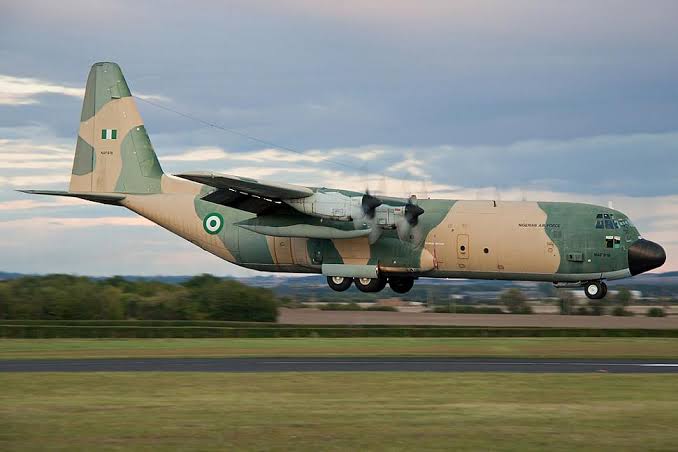
In furtherance of its sustained efforts to boost Air Power employment capability against insurgency and other security challenges in the Country, the Nigerian Air Force (NAF) has reactivated and commissioned another Alpha Jet aircraft after Periodic Depot Maintenance (PDM). The commissioning of the additional Alpha Jet, NAF 455, took place today, 21 March 2020, at the 407 Air Combat Training Group (407 ACTG), Kainji. The event also featured the inspection of the upgraded avionics equipment on the aircraft as well as a thrilling test flight with aerobatics display. In addition, a 2.8km road network traversing almost 80 percent of NAF Base Kainji and a Technicians’ Crew Room were commissioned.

Speaking during the ceremony, the Chief of the Air Staff (CAS), Air Marshal Sadique Abubakar, who expressed satisfaction with the conduct of the PDM, stated that the reactivation would go a long way in boosting the morale of troops on the frontlines and better equip the NAF in its drive to sustain the offensive initiative against the terrorists and insurgents. According to him, the in-house PDM, apart from being cost-effective when compared to the overseas option, also affords NAF technicians the opportunity to build better technical capacity. “It is worth mentioning that our NAF technicians were the major manpower for this PDM. The avionics upgrade, which is the first of its kind on the Alpha Jet, has also significantly improved the aircraft navigation and communications systems thus increasing safety, reliability and overall efficiency”, he added. The CAS noted that the challenge posed by lack of avionics spares, which accounted for over 60 per cent of the Alpha Jet critical spares, had also been addressed with the upgrade. The upgraded instruments and accessories, he said, were readily available in the market, thus ensuring availability of maintenance support spares which would translate to improved aircraft availability. The CAS added that under his watch the NAF, for the first time in its history, had successfully conducted in-country PDM on two C-130H aircraft (NAFs 917 and 913) in Lagos, while Life Extension Programme (LEP) was also successfully conducted on three L-39ZA aircraft in Kano. He further highlighted that an Mi-35P was also undergoing in-Country reactivation in Portharcourt, which would further boost aircraft availability for enhanced mission accomplishment.

Air Marshal Abubakar disclosed that the completion and subsequent commissioning of 2.8 km road infrastructure, which he highlighted was executed through direct labour by the NAF Directorate of Services, was one among many other welfare projects earmarked for Kainji. He stated that during his last tour round the Base, he observed the deplorable state of the road network and believed the Unit deserved better considering its importance to the NAF’s Air Power projection capability. He added that the completed road network as well as other ongoing projects would enable personnel of the Unit discharge their respective duties conveniently, thus translating to enhanced operational performance. The CAS further noted that the Base was also being positioned to efficiently support the A-29 Super Turcano aircraft when it arrives. “I can assure you that this robust infrastructural development would continue to take place in NAF Base Kainji”, he said.

Air Marshal Abubakar expressed his profound appreciation to the Commander-in-Chief of the Armed Forces, President Muhammadu Buhari, for his gracious support to the NAF. He equally thanked the National Assembly, especially the Senate and House Committees on Defence and Air Force, for their continued support to the Service. While thanking the host community for the peaceful co-existence as well as their support to the NAF, the CAS promised that the Service would not rest on its oars until 407 ACTG, which is tasked with the important responsibility of training fighter pilots for the NAF, becomes a model Base.
Earlier in his welcome address, the Air Officer Commanding Air Training Command (AOC ATC), Air Vice Marshal Musa Muktar, who was represented by the Chief of Staff ATC, Air Commodore Abraham Adole, remarked that the commissioning of the reactivated aircraft and the welfare projects were inspiring demonstrations of a leadership whose top priority is to enhance NAF operations and promote morale of personnel through the provision of adequate platforms and enabling environment for effective service delivery. He noted that this would undoubtedly boost the NAF’s efforts in stemming the scourge of criminality bedeviling the Nation. While thanking the CAS for his commitment to the provision of infrastructure that would enhance personnel comfort and professional performance across the spectrum of NAF operations, the AOC pledged the commitment of the ATC as well as 407 ACTG to continue to do more to ensure the security of Nigeria and Nigerians.
After the unveiling of NAF 455 and inspection of the upgraded avionics in the cockpit, a Functional Check Flight (FCF) was conducted to further certify the aircraft fit for combat operations. The FCF, which also featured an exhilarating aerial display, was skillfully executed by the Commander 407 ACTG, Squadron Leader Kingsley Igwegbe, and Flying Officer Kafayat Sanni, the NAF’s first female fighter pilot, whose arrival from the flight was heralded by a traditional water salute. Present at the colourful event was the Emir of Borgu Kingdom, His Royal Highness, Barrister Muhammad Haliru Dantoro Kitoro IV, who commissioned the 2.8 Km Road Project and Technicians’ Crew Room. Other dignitaries included Branch Chiefs and Directors from Headquarters NAF as well as Commanders of Military Units and Heads of Para-Military Agencies in Kainji.
Boeing Announces Key Organization, Leadership Changes

CHICAGO, April 21, 2020 announced key organization and leadership changes aimed at driving greater cross-company integration and continuous improvement; aligning enterprise services to current business conditions while increasing value; streamlining senior leadership roles and responsibilities; and preparing now for the post-pandemic industry footprint. The changes are effective May 1.
A newly formed group — Enterprise Operations, Finance & Strategy — will consolidate several important areas, bringing together teams responsible for manufacturing, supply chain and operations, finance, enterprise performance, strategy, enterprise services and administration. Led by Greg Smith, executive vice president, Enterprise Operations, and chief financial officer, this new global organization will embed operational excellence and consistent lean principles across Boeing and its supply chain, and restore production and supply chain health as Boeing and the broader aerospace industry recover from the COVID-19 pandemic.
Corporate Audit will join Smith’s new group and continue to report directly to the Boeing Board of Directors Audit Committee as it does today, providing independent, objective assurance and advisory services to improve company operations.

Jenette Ramos, senior vice president of Manufacturing, Supply Chain & Operations, will bring 34 years of Boeing experience, leadership and operational skills to a special assignment in support of Smith and Boeing President and CEO David Calhoun.
The company also is combining its legal and core compliance programs, including global trade controls, ethics and business conduct, into a single organization led by Brett Gerry, chief legal officer and executive vice president of Global Compliance. This approach will enhance Boeing’s already strong compliance and internal governance program through focused accountability for, and a more integrated approach to, Boeing compliance responsibilities. It also will help the company proactively address new legal and compliance obligations arising from an increasingly complex global regulatory environment.
To accelerate this important work and to build on the existing strength of its compliance and ethics program, Boeing soon will name a chief compliance officer who will be responsible for leading the company’s compliance, ethics and trade control activities. This person will report to Gerry, with a direct reporting line to Calhoun and the board’s Audit Committee on compliance and ethics issues.
Finally, Boeing Government Operations, led by Executive Vice President Tim Keating, will assume responsibility for the company’s Global Spectrum Management activities, which ensure the safe, efficient and compliant use of radio frequency spectrum in Boeing products and operations.
“I am confident these changes will drive greater alignment among our functions; better equip our commercial, defense and space, and services businesses to deliver on customer commitments in a changing marketplace; and support our continuous efforts to develop talent through challenging leadership assignments,” said Calhoun. “Special thanks to Greg, Brett, Tim and Jenette for taking on new leadership responsibilities.”
Coinciding with these organization changes, Diana Sands, senior vice president of the Office of Internal Governance and Administration, has decided to retire from Boeing later this year after nearly 20 years with the company and following a thorough transition of responsibilities.
“Over the past two decades, Diana has played a key role in developing an industry-leading ethics and compliance program, served in several critical finance roles and been a strong advocate for advancing diversity and inclusion across the company,” said Calhoun. “The Boeing Board of Directors and I are deeply grateful for Diana’s leadership, integrity and dedicated service.”
Boeing is the world’s largest aerospace company and leading provider of commercial airplanes, defense, space and security systems, and global services. As a top U.S. exporter, the company supports commercial and government customers in more than 150 countries. Boeing employs more than 160,000 people worldwide and leverages the talents of a global supplier base. Building on a legacy of aerospace leadership, Boeing continues to lead in technology and innovation, deliver for its customers and invest in its people and future growth.