
Tag Archives: Aviation Central
Bell aircraft used to safeguard food and agriculture amid historic locust infestation

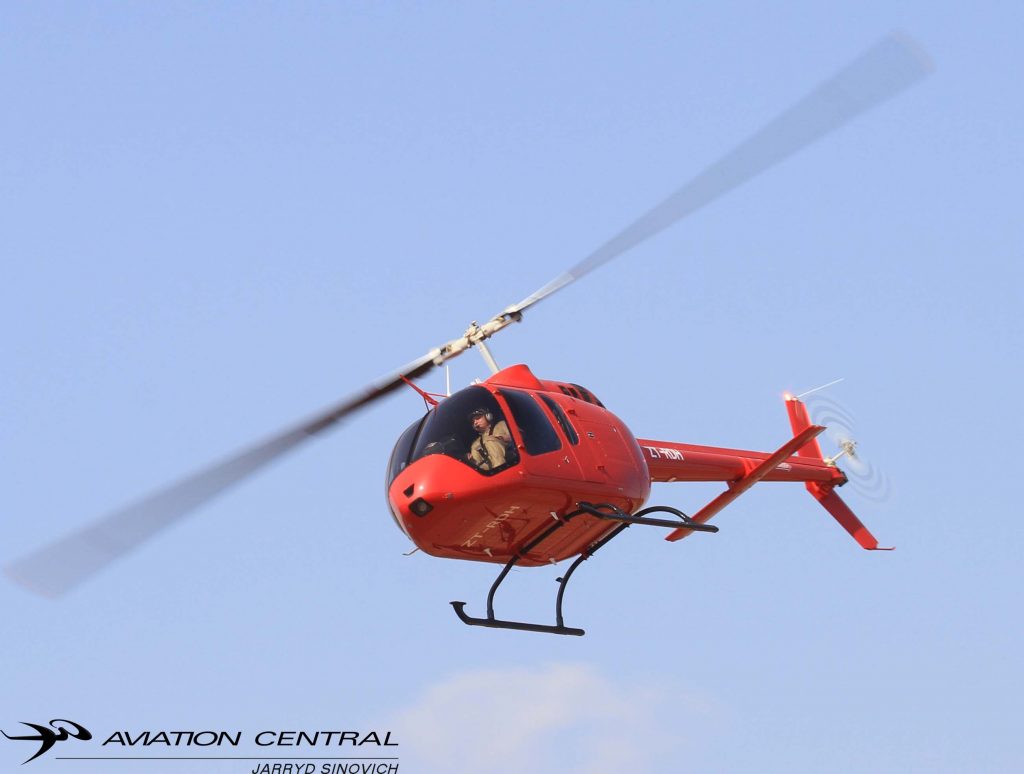
In the last 12 months, food security has been under serious threat from devastating swarms of locusts, destroying crops from East Africa to the Arabian Gulf. With experts warning of a “rolling emergency” 1 that could endanger harvests across the regions for the rest of the year, governments and international organizations face a herculean challenge in controlling the infestations. Aircraft from Bell, the U.S.-based helicopter manufacturer, have been playing a key role in the joint efforts to fight this ancient plague.
According to the UN Food and Agriculture Organization (FAO), desert locusts – whose destructive infestations cause major crop damage – are a species of grasshopper that live largely solitary lives until a combination of conditions promotes breeding and leads them to form massive swarms.

The region’s current crisis began in October 2019 as swarms formed along the Red Sea coastal plains in Yemen Saudi Arabia, Eritrea and Sudan, spreading eastwards across the Arabian peninsula and further south in Africa in the following months.
By January, Kenya, one of the countries hardest hit by the crisis, was already experiencing its worst outbreak of desert locusts in 70 years. To target this problem, authorities contracted South African helicopter operator BAC Helicopters, who had recently purchased three Bell 206L-4 helicopters, to carry out the Emergency Desert Locust Survey and Control operation in an effected part of Kenya.

The helicopters were tasked with surveying vast areas throughout the Marsabit and Turkana counties in Northern Kenya, locating and mapping the locust swarms which were threatening food security through the region. The 206L-4’s were each equipped with specialized Agricultural
Survey Equipment, an FDC Barrier Filter and Satellite Tracking System. Essential data gathered by the survey helicopters was then transferred to both fixed wing and helicopter spraying aircraft, allowing them to accurately target specific areas where the locust swarms were present.
Sameer Rehman, Managing Director of Africa and the Middle East, Bell, commented: “With a number of countries in eastern Africa and some parts of the Middle East at ongoing risk, the FAO has estimated that a locust control plan would cost $76 million to secure agriculture in the
affected region. Bell understands the need to protect the food source of these regions and we’re pleased our products can be essential tools in the collective mission to eradicate the problem.
“When it comes to food security, the stakes are very high so the reliability and capability of every tool used in the fight against locust swarms is paramount. The Bell 206, and newer light aircraft like the Bell 505 have shown time and again that they can be trusted to operate in high
temperatures and with heavy payloads, providing a capable defense wherever the swarms may be present.”
In most years, desert locust swarms tend to die out during dry season. However, with unusually high rainfall in 2020 in certain regions, the exponential growth in the populations has not abated,
creating the specter of further swarms over the coming months.
The FAO states that countries most affected by the locust situation are Ethiopia, Kenya, Somalia in Africa as well as Yemen, Saudi Arabia and parts of the UAE and Oman in the Middle East.
Retirement Of SAAF Lieutenant General Fabian Msimang

On Wednesday 30 September,members of the South African Air force and members of the media got to witness a series of beautiful flypasts from a number of aircraft of squadrons based across South Africa.A fitting tribute and thank you to the former Chief of the South African Air force!


Lieutenant General Fabian Zimpande (Zakes) Msimang integrated into the South African National Defence Force in 1994 after the first Democratic Elections as a qualified helicopter pilot.He received his flying training at Frunze 1 Central Officers Training Center – Kirghistan, in the Union of Soviet Socialist Republics between 1986 to 1991.


He graduated from the institution with a diploma in Command and Tactics of Military Aviation.During Msimang’s Career he has flown the Mi8, Mi25 ,Alouette III and Oryx Helicopters.He also completed a factory conversion onto the Agusta A109E Helicopter at Agusta/Westland now known at Leonardo in Italy.


He was a member of the Umkhonto We Sizwe (MK),the military wing of the African National Congress.He engaged in combat in Angola in 1986.In 1994,he completed the Air force Junior Staff Course in Zimbabwe before returning to the South African National Defence Force.Post 1994,he served as an operational pilot in both maritime and inland operations.

In 2000,Msimang was appointed the assistant project officer on the acquisition programme of the Agusta A109LUH in Italy.He went onto successfully complete the Senior Staff Course at the Italian Air force War School.On his return in 2003 from Italy,he was appointed the Officer Commanding of 87 Helicopter Flying School at Air force Base Bloemspruit. The Following year he successfully completed the Joint Senior Command and Staff Programme at the South African National War College.


In 2005,he was appointed officer commander of Air force Base Bloemspruit and promoted to the rank of Colonel.In 2006,he completed the Executive National Security Programme at the South African National Defence College.In 2007,Msimang,after a two and half year tour as OC at Air force Base Bloemspruit,he was appointed Director Helicopter Systems and Promoted to the rank of Brigadier General at Air Command.


In November 2010,he was appointed Chief Director Air Policy and Plans and then promoted to the rank of Major General,responsible for Air force Strategy,policies,capabilities and resource allocation.On 28 September 2012 he was accepted command as the Chief of the South African Air force from Lieutenant-General Carlo Gagiano.


Bell APT 70 Successfully Completes NASA’s Systems Integration and

Fort Worth, Texas (1 October, 2020) – Bell Textron Inc., a Textron Inc. (NYSE: TXT) company, announced today the successful flight of the Bell Autonomous Pod Transport (APT) 70 as part of a joint
flight demonstration with NASA. Bell was selected to participate in NASA’s Systems Integration and Operationalization (SIO) activity in 2018, which includes multiple flight demonstrations focusing on
different types of Unmanned Aircraft Systems (UAS) and their flight environments.
The objective of Bell’s SIO demonstration was to execute a Beyond Visual Line-of-Sight (BVLOS) mission in an urban environment transitioning into and out of Class B airspace representing future commercial
flights. Mission results will be used to evaluate and demonstrate Detect and Avoid (DAA) and Command and Control (C2) technologies for use in future certified operations in controlled and uncontrolled
airspace. Data collected during the demonstration will be used to support future standards development and Federal Aviation Administration (FAA) certification guidelines.

“This successful demonstration highlights the great potential for the APT 70 to complete complex
missions for businesses and healthcare providers,” said Michael Thacker, executive vice president,
Innovation and Commercial Business. “With teammates like NASA, we can carve a path forward for future commercial operations to solve the cargo and goods transportation challenges our world currently faces.”
Launching from Bell’s Floyd Carlson field in Fort Worth, TX, the APT 70 flew a preprogrammed 10-mile circuit path along the Trinity River. Once armed from the ground control station, the APT 70 initiated a
vertical takeoff.

The vehicle then rotated to fly on its wings where it became nearly silent to the ground below. The vehicle executed its mission profile at an altitude of 500 feet above ground level. The route
included a road crossing and transition in and out of Class B airspace. Communication between the ground station and the aircraft was maintained through a redundant datalink. A prototype airborne detect
and avoid system, along with visual observers, provided the remote pilot with awareness of air traffic in
the vicinity and recommended flight maneuvers.

NASA is excited to partner with Bell to help accelerate routine UAS operations into the national airspace
with this successful flight demo,” said Mauricio Rivas, UAS integration in the NAS project manager at NASA’s Armstrong Flight Research Center. “Our efforts with Bell and our other SIO industry partners will
help commercial UAS move closer towards certification to make missions like this transport flight a
common event.”
Bell’s technology partners for the demonstration include Xwing and the University of Massachusetts
Amherst’s Center for Collaborative Adaptive Sensing of the Atmosphere (CASA). Integrated onto the APT
70 is Xwing’s airborne, multi-sensing detect and avoid system. Xwing’s system comprises of radars, ADS- B, visual system and onboard processing to provide aircraft tracks and pilot alerts transmitted to the
ground station. The APT 70 also includes CASA’s intuitive, integrated display to provide pilots with local weather risk awareness and route-based weather alerts issued by their City Warn Hazard Notification
System deployed in the DFW metroplex.

It is envisioned that in the future, an operational APT 70 could provide efficient, rapid and dependable transport for payloads up to 70lbs. The APT 70 is estimated to move three times as fast as ground transportation. The vehicle is capable of autonomous flight, automatically flying a programmed flight route and handling an array of contingency functions. Potential uses for the APT 70 include medical deliveries,
third-party logistics, offshore delivery, humanitarian relief and many more.
Heritage Day Celebrations at AFB Ysterplaat

By Rayno Snyman
There was a buzz in the air, excitement of the unknown. We had no idea what was in store for us and what a Heritage Day it was on Thursday 24 September 2020.

We were then greeted by officer commanding Airforce Base Ysterplaat Colonel C. Moatshe. Later in the day the out going chief of the Airforce Lieutenant General Fabian Msimang, who earlier had a flight in a Pilatus PC7MkII not far up the road at AFB Langebaanweg, home of the Silver Falcons Aerobatic Team.


Airforce base Ysterplaat, which hasn’t seen an Airshow since 2011.Members of the South African Air Force, Media and friends of the South African Air Force Museum Cape Town Branch got to see some of the pristine Museum aircraft on static display as well as flying units based at Ysterplaat, such as 22 Squadron a helicopter unit and 35 Sqaudron a Maritime Patrol aircraft unit.


It was a privilege to witness the amazing aircraft that have crossed paths in our Airforce as 2020 the SAAF celebrated their Centenary. From fast jets to helicopters and the mighty Shackleton. What a treat it was. The Shackleton was the highlight of the day for us, those Griffon engines sent vibrations right to our cores, not to mention the fly by the C-47TP to perfectly commemorate the Shackleton’s own heritage.


Heritage Day was perfectly celebrated at AFB Ysterplaat as it was fantastic to see our servicemen and women, young and old, active and retired from all different backgrounds, heritages and cultures coming together to celebrate this special day. We had the honour to receive a narrated tour of the Shackleton by Mr Ashbury a former 35 Squadron unit member, who could not share the history of this aircraft and his experience with more passion, even if he tried.


Many familar faces were seen and much was learned to appreciate the effort and training of everyone at SAAF, not only pilots but the engineers, ground crew, specialists and all involved who all play a vital role in keeping us safe.


We cannot wait for next year and hope to see more of the Shackleton ground runs and maybe even a Airshow again.


Cuban South African Airforce Graduates

by Lt Gen F.Z. Msimang, Chief of the South African Air Force
Life is indeed cyclical. Many years ago, in the mid-80’s a young soldier by the name Zakes Khulu along with his comrades found themselves in a foreign country pursuing aviation studies. They learned all they could in that country, immersing themselves in its culture, its ways of life. They would eventually return home with their newly acquired skills, eager to start collaborating in establishing a new democracy. Looking back at their journey in many ways mirrors your own. You too were deployed to a foreign country to learn, to grow, to improve and be immersed in a culture engendered with liberation so that when you returned, which you have now done, you will continue the democracy building project. That Zakes Khulu with some of those surviving comrades, stand before you now beaming with pride for your extraordinary achievements, watching you ride the waves of endless possibilities. We are extremely proud of you all.

We are here, today, under strict Covid-19 regulations, which we must observe and respect accordingly, to welcome all of you on parade and your proud families, loved ones and friends to this auspicious and memorable occasion. We are here to honour a group of military aviators who trained in the Republic of Cuba; we welcome them home to their esteemed SAAF flying community.

Graduates, you have touched my heart. You have carried yourselves with exceptional grace and honour. You kept your promise to me. You have brought home commendable results but know this road still unfolds before your feet. Baba Mandela – the Father of our Nation – once said: “After climbing a great hill, one only finds that there are many more hills to climb.”
This parade marks one of the many summits you will have to reach in your long careers in the SANDF.

But as your achievements belong to you they belong also to your unwavering support structures. It was a community project. This journey would have been impossible without the commitment and dedication of your instructors, your mentors and of cause – the support of your proud parents, family members and loved ones. A special word of thank you to all the SAAF members who helped you work through obstacles, while you tenaciously invited the universe to mold you into fine soldiers.
Our unbreakable bonds between the Cubas and our government can be traced to its support of African liberation movements, following the overthrow of the Cuban dictator Fulgencio Batista in 1959 by “The Movement,” formed by late longtime Cuban leader Fidel Castro. Cuba supported the anti-apartheid struggle in this country opposing racial segregation when it was not fashionable to do so. It criticised the international community for blatantly ignoring South Africa’s human rights’ violations – the very rights that many are taking for granted in this country today.
When the democratic South African National Defence Force entered into bilateral agreements with The Cuban Revolutionary Armed Forces to create study opportunities for our soldiers, the South African Air Force (SAAF) embraced this opportunity with open arms.
We identified disciplined young men and women to undergo training in Cuba, where they would be immersed in a different culture, social structure, and political landscape. In 2014, we sent twenty-seven candidates to undergo various training specialties in aviation engineering, air traffic control and pilot training fields. They stand before us now: a result of a bond based on shared revolutionary principles.
I kept an eagle eye on your developments in Cuba. I was pleased to learn that you turned every challenge into an opportunity for growth. Your results speak for themselves. You received golden awards for both academia and sports. You even experienced the devastating hurricane Irma and used that difficult time to learn major survival skills. Your stay in Cuba also coincided with the mourning of the passing of one the world’s finest revolutionaries Fidel Castro, his message of resistance to oppression resounding strong. Cuba provided you with immense lessons in patriotism, survival and determination. May these lessons nourish you.
Additional SAAF students commenced with their aviation training in Cuba in 2018 and 2019. We are expecting more graduates in 2021, 2022 amd 2026. Extending the SAAF training scope to various foreign countries will ultimately bring about a generation of differently trained individuals who if nurtured and allowed to plough back their knowledge, will enhance our outlook as part of the global community.
And as we reach our close, I must stress that the knowledge you have acquired is crucial in meeting our Constitutional mandate and requirements. Our constitution states that “the Defence Force must be structured and managed as a disciplined military force”. As a soldier, for me, the success of the SAAF will be underpinned by an enforcement of discipline and the concentration on functional, developmental and physical training. May we be soldiers who live in integrity: for ours is to serve with discipline, dignity, professionalism and patriotism. You have answered our Nation’sd call – Which is Service, and Country. May you grow to be airmen with integrity,…… for ours is to serve with discipline, dignity, professionalism and patriotism.
As proud and devoted members of the SANDF, we must have an eagle’s eye view on any challenge and hover above it menacingly, in the knowledge that our citizenry expects nothing less than a deep sense of security from us.
The Chief of the SAAF concluded his speech below:
TO THE MEMBERS ON PARADE, I WISH YOU ALL SUCCESS IN YOUR FUTURE ENDEAVOURS. YOU ARE OUR FUTURE LEADERS. GO OUT THERE AND SERVE THE NATION. THE AIR FORCE COMMAND COUNCIL WILL CERTAINLY BE FOLLOWING YOUR CAREERS WITH INTEREST – CONTINUE WITH THE HARD WORK AND DISCIPLINE YOU HAVE DEMONSTRATED THUS FAR.
MAY YOU BE ABUNDANTLY BLESSED.
I THANK YOU.
Aero L39s of the Cuban Airforce were used as ab-intio trainers for South African Air Force pupil pilots!


Russian Tu-160 strategic bombers set new WORLD RECORD for range & duration of non-stop flight

pair of Russian Tu-160 strategic bombers have spent more than 25 hours in the air and covered over 20,000km, setting a new world record for non-stop flight range, and duration, for this type of aircraft, it has been revealed.

The Defense Ministry, in Moscow, made the announcement on Saturday with Sergey Kobylash, the commander of Russia’s long-range aviation service, saying that “nobody has flown this type of aircraft longer.”

The record, which was set on Saturday, saw two Tupolev Tu-160 strategic bombers (NATO reporting name ‘Blackjack’) “staying in the air for more than 25 hours and covering a distance of over 20,000km (12,427 miles),” the commander added.
The landmark flight took place above the neutral waters of the Arctic and Pacific oceans as well as the Kara, Laptev, East Siberian, Chukchi and Barents seas, and was performed in full compliance with international rules governing use of airspace, he pointed out.
The Tu-160s refueled three times in the air during their mission, which required six Il-78 tanker planes to be mobilised. At some points along their route, the bombers were escorted by Russian Su-35 fighter jets as well as “aircraft of foreign states,” Kobylash said.

The previous record was also set by Tu-160s, which spent 24 hours and 24 minutes in the air back in 2010. In the case of passenger aircraft, a Qantas Airlines flight from New York to Sydney last year is considered to be the longest, as it saw a Boeing 787-9 with 49 people on board staying the air for 19 hours and 15 minutes, covering a distance of 16,200km (around 10,066 miles).

TU-160s Visit South Africa last October!
Last year October a pair of TU-160s traveled to South Africa landing at Air force Base Waterkloof, City of Tshwane. This was the first time this type of aircraft had landed on African soil for the first time.


First Brazilian Saab Gripen E Arrives in Brazil
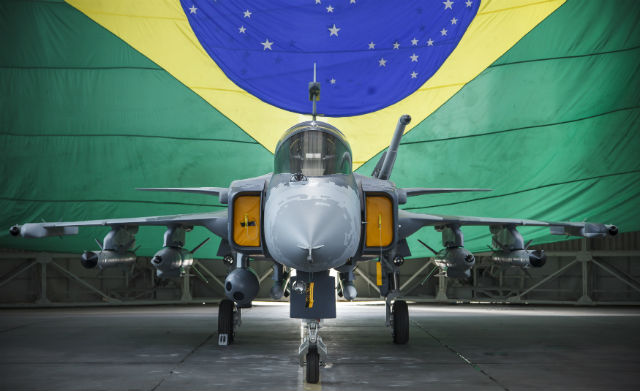
The first Brazilian Saab Gripen E single-seat fighter aircraft has arrived in Brazil on Sunday, September 20, Saab announced.
The aircraft arrived through sea after been shipped from Norrköping in Sweden.
The first Brazilian Gripen is a test aircraft (39-6001, tail number FAB4100) and has been flying in Sweden since its maiden flight on August 26, 2019. In September that year, the aircraft arrived to start the flight test programme for flight envelope expansion as well as testing of tactical system and sensors.

Brazil has ordered 28 Gripen E single-seat jets that will be delivered to Brazil starting from 2021 and eight Gripen F twin-seat jets, starting from 2023. Saab is to building first 13 aircraft at its facility in Linköping, Sweden, while the remaining 23 will be built in Brazil.
Earlier this year, Saab performed the fist metal cut for the first Brazilian Gripen F, marking an important milestone in the program. The first part was manufactured recently at Saab’s facilities in Linköping, Sweden and is for the air duct section, just behind the cockpit of the aircraft.
Saab Aeronáutica Montagens (SAM) in Brazil, Saab’s first aerostructures plant outside of Sweden for the Gripen E/F, has recently announced the start of production in support of the program. This site builds sections of Gripen, which will then be delivered to the final assembly facilities at the Embraer plant in Gavião Peixoto, São Paulo, Brazil and to Linköping, Sweden.

The tail cone and front fuselage of the single-seat version of the Gripen fighter (Gripen E) are the first aerostructures to enter into production at SAM. Subsequently, the aerodynamic brakes, rear fuselage, wing box and front fuselage for the two-seater version will also be manufactured at SAM.
‘The pilot who saved Buckingham Palace’ September 15th, 1940

The collision between a Dornier and Hurricane over Buckingham Palace on ‘Battle of Britain Day’ is one of the iconic moments of ‘The Battle’. The falling planes were captured on film from the ground and the exploits of the daring pilot who saved Buckingham Palace from the German bomber were widely reported in national newspapers. A version of the incident is even appeared in the 1969 feature film ‘The Battle of Britain’.

At 11 Group Headquarters in Uxbridge Air Vice Marshal Keith Park had important guests; Winston Churchill and his wife. There was no significance to Churchill’s visit, he was ‘just passing’ and thought he would call in. As Keith Park led his guests down the stairs to the operations room some fifty feet underground he tactfully pointed out to Winston that the ventilation system would not cope with his cigar smoke; he clenched his cigar, unlit, between his teeth as events unfolded. Park had been made privy to intelligence that an all-out attack was soon to come and there had been a lull in activity for over a week. As he ordered his squadrons into the air one after another he is reputed to have said, “This, I think is what we have been waiting for. I think that it is about to happen.”

The scene was set for an epic battle.One-by-one squadrons were brought to Stand By and then Readiness as the enemy forces were plotted on the ops table. By midday twenty-three fighter squadrons were airborne. The scale of the enemy attack was such that Park knew his pilots could not repulse it; London was in for a ‘pasting’.Piloting one of the Dornier 17s was 27 year old Oberleutnant Robert Zehbe of the bomber unit 1/KG76. Zehbe’s crew were old hands and had successfully completed several raids, including Kenley on August 18th and London on September 7th, but this time things were not going well for them. One engine was giving trouble and they began to lag behind the formation; a vulnerable position as fighter pilots loved to pick off a straggler. Turning for home was a riskier option, for an ailing bomber chugging alone across the skies of Kent was a sitting duck. They were 500 yards behind the formation when the first fighter attack came just south of London.

Flight Lieutenant Jefferies led his flight of 310 (Czech) Squadron into the fray and set the Dornier’s port engine on fire; then his less experienced Czech charges had their turn at the bomber. Pilots from 609 and 504 squadrons also seized on the opportunity of an easy kill and poured more gunfire into the hapless Dornier, yet still it limped on. Two of its crew baled out; Ludwig Armbruster at Sydenham and Leo Hammermeister at Dulwich. Crossing the Thames at Battersea six fighters were seen making repeated attacks. Finally Robert Zehbe abandoned the Dornier, leaving his young gunner Gustav Hubel dead or mortally wounded in the stricken aircraft. A badly wounded Zehbe landed at Kennington, where was beaten up by civilians; he died later of injuries.

One of the attacking pilots was 26 year old Sergeant Ray Holmes. Ray, known as ‘Arty’ after his initial R-T, was flying a Hurricane from 504 Squadron and his actions over London would propel him into limelight then – and 64 years later

The Pilot’s Story from War IllustratedAnd here is the story told by the pilot who brought the ’plane down at Victoria Station. He is a Sergeant Pilot from West Kirby, in Cheshire, and it was his first fight. After he had shot down the enemy machine he had to jump by parachute. He said:“I was in the last section of my Squadron, and my Dornier victim took all that I had to give him. Bits flew off him and I broke away intending to turn and attack again. My wind¬screen was covered with black oil, and when I did attack again I think it must have been a different machine. Anyway, as soon as I fired a big flame shot up, and I must have got his petrol tanks.“I broke away again, and turned to make a head-on attack on another Dornier, firing a burst straight into its cockpit. At first I thought a piece of the Dornier had flown off but then I saw it was a German baling out. I passed so near that I believe I touched the parachute.

“As I made my final attack, my right wing struck something. I went into a terrific spin. There was no response from my controls.“I flung the hood back and struggled to get out. I must have been doing well over 400 m.p.h. when I finally got out of the cockpit. The wind was so strong it was like a piece of an airplane hitting me. People on the ground told me later that my parachute opened at only three hundred feet.“I spun across a house in Chelsea, got my feet down on a gutter, slid down the roof, and fell into the garden on my back. Then two girls came up to me, and I was so glad to see them that I kissed them both.”Ray Holmes landed in Hugh Street and, as soon he had his wits about him, he was born off to a pub in Pimlico Road by the locals for a stiff brandy

As the Dornier broke up its bombs fell, unarmed, over London. Two 50 kilo bombs fell in the grounds of Buckingham Palace, one on the palace’s lawn. A shackle was found still attached to one of the bombs and was presented to the King. In the days before, several bombs had fallen on the palace and caused damage; now a bomber been brought down within sight of it. Soon journalists had hold of the story and, in its re-telling, the story became embroidered and elaborated upon. Soon the hero fighter pilot had deliberately rammed the German moments before it dropped its deadly cargo on the Royal family – he had saved the King single-handed!
Professional photographer and artist Chris Bennett had long suspected that some evidence of the Hurricane would have survived beneath the road into which it had crashed, but as it is one of the busiest roads in London a recovery seemed almost impossible.
The SAPFA Secunda Speed Rally – 12 September 2020

by Rob Jonkers
This year we have returned again to the birth place of the Speed Rally, being the 3 rd time this event has been held here, and appropriate that our Speed Rally event during these unprecedented times has come
back to its roots, with 8 months having passed from the last one held in Witbank. Although this would have been the season finale, SAPFA had decided to extend this 2nd season up to the end of the year to also
include Springs which will be held on the 28th November, this will then at least have had 2020 with 3 events, then we can start afresh with a new season in 2021.

Once after lockdown level 3 we were granted the means to hold events, planning started for Secunda, with competitors having snapped up the open spots of 23 teams within days, given the popularity of this
event. At least under Level 2 Covid guidelines, overnighting could also be done, with arrivals and test flights on Friday the 11th , as well as the extended briefing on steroids with the race number handouts.


Our host club with Chairman Johan van Niekerk went all out to support the event, making arrangements for food on site, and contacts for accommodation, and the use of club facilities. Arrivals started coming in
from just before midday with flight tests commencing in good conditions under the guidance of Mark Clulow and Sean Cronin, the wind however started to pick up with gusty conditions, which at least settled
down in the late afternoon.


Thereafter at 18h30, Jonty Esser as the MC introduced Rob Jonkers who took to the stage and provided a briefing on what to expect for the next day in terms of the planned route, how many turn-points, distance,
departure and arrivals protocol, and also how the scoring system would world work and the expected weather conditions.


Jonty Esser then took to the stage in his signature competing crew introductory theme song videos and race number handouts, and also including introductions to the event and team sponsors, which has
unfortunately reduced over this last period, but was great to see that some sponsors were able to maintain their support for their teams. A scrumptious braai was laid on by the club to end the evening with around
the fire stories on a high note.


For Saturday the briefing started at 08h30, which was a shortened version just to cover the basics of the route, radio procedures and weather, which turned out to be pristine conditions with very little wind.
With the briefing over, teams prepared their aircraft, while the organisers got the papers ready. Each team would then receive an envelope with a map, turn-point photos, a minute marker and a GPS logger to
record their track. Aircraft were then also scrutineered with all portable electronic devices sealed up in bags. For this event Mark & Shane from Century Avionics were on hand to also block off / seal Aircraft
GPS and autopilot systems.

Scrutineers Chareen, Lizelle and Sean were on hand to seal up all portable GPS capable devices,handing out papers at the allotted time, and also checking the fuel tanks were full. Chief Marshall Adrian
Cronje and Starter Mark Clulow set up at the starting line adjacent the threshold of Runway 29, who would release each aircraft at their allotted time slot. Each team then received their envelopes with their loggers
at 20 minutes prior take-off time, taxi to the starting line within 10 minutes of brake release. 1 st take-off was at 10h10 for the slowest aircraft and last take-off at 10h40, with planned arrival at 11h30.


With all the competitors off towards the north west, the route had a mix of easy and challenging turn points. In general the competitors found the course easy enough this time round, with the photographs now in
larger format to identify the ground features more prominently, which can be seen in the results where many had a clear round in their tracks. At just before 11h30, the first aircraft over the line was a little early,and then followed by at least three quarters of the field within 1 minute, with tail enders after that.
After all teams having returned, the scoring team got to work to analyse the results, completing the individual scores by 13:30, with prize giving at 14:00. MC Jonty Esser thanked everybody in the Speed Rally series for their contributions, this was followed by Rob Jonkers showing some interesting tracks for the day.

Thereafter trophies were handed out to firstly the host club for hosting the event, their club house now sporting 3 of these trophies, the most interesting track flown which went to Hilton Wolff and Rob Osner
and the best crew spirit going to Lourence Matthee and Christo Erasmus.

The winners in the handicap category were father and son Hendrik & Jandre Loots in their Sling ZU-IHK, in second place Eugene van Staden & Manaf Mubarak in their Sling ZU-IBH and in third place Leon Joubert & Sandi Goddard in their Lancair ZU-LNC. The first thirteen placings were the only crews who managed a clean penalty free round.

The winners in the accuracy category were again father and son Hendrik & Jandre Loots in their Sling ZU-IHK, in second place also father and son Johan Whiteman & Quintin Kruger in their Cherokee 235 ZS-FVV, and in third place Phil Wakeley & Mary de Klerk in their C210 ZS-CNY.


Many thanks to the Secunda Aero Club for hosting this fantastic event, the SAPFA team of Adrian Cronje as the Chief Marshall, Nigel Musgrave as the Safety Officer, Dirk de Vos doing the scoring, Mark Clulow & Sean Cronin doing test flights and starting, Marc & Shane for Century Avionics for Scrutineering, Chareen Shillaw, Lizelle Kruger handing out competition papers to the crews as well as Scrutineering, Jonty & Lizelle & Sandy for putting together an awesome Friday evening launch event, and the ATNS team for managing the ATC for the weekend.


£317m contract awarded to develop next generation radar for the Royal Air Force Typhoon

BAE Systems and Leonardo have been awarded a contract to develop the Active Electronically Scanned Array (AESA), the European Common Radar System Mark 2(ECRS Mk2) radar, to a standard ready to be integrated on to RAF Typhoons.
It will sustain more than 600 highly skilled jobs across the country, including more than 300 at Leonardo’s site in Edinburgh, over 100 electronic warfare specialists at the company’s site in Luton, and 120 engineers at BAE Systems’ site in Lancashire.
The ECRS2 is a multi-functional array (MFA) that will give UK Typhoons a world-leading Electronic Warfare capability, in addition to traditional radar functions, including wide band Electronic Attack. It will equip RAF pilots with the ability to locate, identify and suppress enemy air defences using high-powered jamming. They can engage targets whilst beyond the reach of threats – even when they’re looking in another direction – and operate inside the range of opposing air defences, remaining fully protected throughout. This game-changing capability will replace the mechanically-scanning radar that RAF Typhoons are currently equipped with and will ensure the UK retains the freedom to deliver air power wherever and whenever it is needed. It also enables the Typhoons to link up with future data-driven weapons to combat rapidly evolving air defences, ensuring that UK Typhoons can continue to dominate the battlespace for years to come.

Andrea Thompson, Managing Director Europe & International for BAE Systems’ Air sector, said:
“This capability will allow Typhoon to take its place in the future battlespace for decades to come, maturing key technologies for future combat air systems and ensuring interoperability. As well as securing highly skilled jobs, it will sustain the key skills needed to keep the UK at the forefront of the global Combat Air sector. We look forward to continuing to work alongside the Eurofighter nations and our industry partners to ensure Typhoon delivers the needs of today and answers the challenges of tomorrow.”

Mark Hamilton, Senior Vice-President Electronic Warfare, Leonardo, said:
“This contract is great news for the UK, which will get the world’s most capable fighter radar, and great news for British engineering. Inventing, developing and building advanced technology here in the UK allows us to understand and meet the specific requirements of our Armed Forces and to secure export orders all around the world, boosting the whole UK economy.” The new radar will be based on Active Electronically Scanned Array (AESA) technology and will provide game-changing capabilities based on a revolutionary MFA. It has significantly more Transmit-Receive Elements than other radars, making Mk2 the most capable fighter AESA radar in the world, maintaining the same power and precision of traditional radars but also enabling the simultaneous operation of its wide-band Electronic Warfare functionality. BAE Systems, the UK’s prime contractor for the Typhoon, will integrate the new sensor which will be developed by Leonardo, the UK’s defence electronics champion.
Both companies are currently working as part of a four-nation development programme alongside Eurofighter consortium partners in Germany, Spain and Italy on a baseline version of the AESA radar. The ECRS Mk2 is a completely new approach designed to meet the operational needs of the RAF and future export customers. The UK’s commitment follows a similar commitment from Germany and Spain to deliver their own national requirements for an AESA radar.