
Tag Archives: Aviation Central
Raytheon Technologies to train Afghan Air Force pilots

ORLANDO, Fla., May 12, 2020 /PRNewswire/ — The U.S. Army Contracting Command has selected Raytheon Intelligence & Space, a business of Raytheon Technologies (NYSE: RTX), to train Afghanistan Air Force pilots under a three-year contract valued up to $145 million.
Raytheon will conduct initial flight training for the U.S. Army’s Program Executive Office for Simulation, Training and Instrumentation. The Afghanistan Air Force students will go through flight school in third-party nations in Europe and the Middle East. Raytheon will provide tailored training for the Afghanistan Air Force pilots, including classroom, fixed-wing and rotary aircraft instruction.

“Raytheon training experts help the Afghanistan Air Force develop a pipeline of skilled flyers and officers,” said Bob Williams, vice president of Global Training Solutions at Raytheon Intelligence & Space. “Our program uses the latest training techniques, and a focus on individual mentorship to produce well-rounded officers that will help create a secure future for Afghanistan.”
The Raytheon Afghanistan Air Force pilot training program began in 2010. The original mission for basic flight proficiency has expanded to advanced aircraft qualifications and flight techniques. Raytheon’s focus on mentorship and leadership training helps the program maintain a 93 percent graduation rate with every student returned to Afghanistan.
The Afghanistan Air Force Pilot Training program was awarded under the Enterprise Training Services Contract vehicle. Raytheon previously announced a related task order for the Aviation Maintenance Training program.

About Raytheon Technologies
Raytheon Technologies Corporation is an aerospace and defense company that provides advanced systems and services for commercial, military and government customers worldwide. With 195,000 employees and four industry-leading businesses ― Collins Aerospace Systems, Pratt & Whitney, Raytheon Intelligence & Space and Raytheon Missiles & Defense ― the company delivers solutions that push the boundaries in avionics, cybersecurity, directed energy, electric propulsion, hypersonics, and quantum physics. The company, formed in 2020 through the combination of Raytheon Company and the United Technologies Corporation aerospace businesses, is headquartered in Waltham, Massachusetts.
Rolls-Royce Launches First-time Immersive Virtual Reality Training For Business Aviation Customers

Even during the COVID-19 pandemic, Rolls-Royce continues to ensure world-class support for our global customer base. As part of our IntelligentEngine vision we are further expanding the use of immersive Virtual Reality technology for customer training.
The latest addition to the remote training programme is an instructor-led distance learning course, providing a comprehensive overview of the construction, design and operation of the Rolls-Royce BR725 engine that powers Gulfstream’s current flagship G650 business aircraft family. After completion of this comprehensive two-day training course, participants will be able to service the engine and undertake non-routine maintenance.

Andy Robinson, SVP Customers and Services – Business Aviation, Rolls-Royce, said: “Rolls-Royce has been the leading engine supplier for business aircraft for more than two decades thanks to our continued commitment to the highest levels of service support. We are tremendously proud to have been voted number one in the latest Engine Product Support Services Survey of Aviation International News (AIN) by our operators.

Digitalisation plays a vital role in in bringing our IntelligentEngine vision to life; we use it to design, test and maintain our engines. This new immersive live Virtual Training tool is nothing short of a game-changer – it makes us the leader in technical training and allows customers to participate in the new training, wherever they are in the world. They just need an internet connection, and the required VR equipment, which will be shipped directly to their door,” Andy added.
Lee Bradshaw, Director of Technical Operations, Cox Aviation, said: “The new Virtual Reality maintenance course is a great example of the innovative thinking that is needed to meet the challenges of our ever-changing world. This programme allows each student to immerse themselves in an augmented environment full of realistic images, interactive functions and auditory feedback to delve deeper into the engine like never before. The course complements the industry-leading service already provided by Rolls-Royce and is another reminder of why this company is pioneering the way in creative solutions for the future.”
While not intended to completely replace practical training, Rolls-Royce see the value Virtual Reality adds for customers, such as higher flexibility and the elimination of the need to ship a full size training engine. The user finds themself as part of two realistic scenarios – the engine installed on the aircraft in a virtual hangar and the BR725 engine alone, just like it would be in our in-person training courses. The immersive environment allows them not only to watch the process steps to get familiar with the respective task, but to interact with the engine and the tools, and actually accomplish the task under the constant supervision of the instructor.
Where to enroll? https://rollsroycetraining.wufoo.com/forms/maj05r114g9sx7/
About Rolls-Royce Holdings plc
1. Rolls-Royce pioneers cutting-edge technologies that deliver clean, safe and competitive solutions to meet our planet’s vital power needs.
2. Rolls-Royce has customers in more than 150 countries, comprising more than 400 airlines and leasing customers, 160 armed forces, 70 navies, and more than 5,000 power and nuclear customers.
3. Annual underlying revenue was £15.3 billion in 2019, around half of which came from the provision of aftermarket services.
4. In 2019, Rolls-Royce invested £1.45 billion on research and development. We also support a global network of 29 University Technology Centres, which position Rolls Royce engineers at the forefront of scientific research.
5. The Group has a strong commitment to apprentice and graduate recruitment and to further developing employee skills.
At Cruising Altitude in 2019 and Prepared for Turbulence in the Future-Pilatus

Pilatus reported another very successful business year in 2019, exceeding the one billion mark yet again with turnover of approximately 1.1 billion Swiss francs. Operating income totalled 153 million Swiss francs, incoming orders amounted to 1.1 billion Swiss francs. Pilatus staff enjoyed a share in this success with a generous bonus payout – even in the current difficult economic climate.
2019 will go down in the company’s 80 year history as another very successful twelve months overall. The figures were very similar to those reported in 2018. Total aircraft deliveries came in at 134 – 83 PC-12 NGs, 40 PC-24s and 11 PC-21s – the most extensive production programme yet.
Successful PC-24 market launch
The market rollout of the brand-new PC-24 is now complete and Pilatus has well and truly left the build-up phase. 75 PC-24s have been delivered to date and are in use on every continent. The PC-24 with the most hours in the air has already flown over 1,800 hours. The order book re-opened in May last year and demand for the world’s unique Pilatus Super Versatile Jet remains as high as ever. The PC-24 has won prestigious new clients such as Volkswagen and KSA, the Swedish air ambulance service – important milestones in a programme which is still young as yet.

A comprehensive post-certification test campaign was performed in 2019 to have the Super Versatile Jet approved for operations on rough field runways and in other conditions. All PC-24s are now authorised for use on wet and snow-covered unpaved and grass runways. In the same vein, other PC-24 product improvements have been made to eliminate initial teething problems and provide customers with extra added benefits.
Excellent response to the PC-12 NGX
Pilatus launched the PC-12 NGX in autumn 2019: compared to its predecessor, this further development of the world’s best-selling single-engine turboprop in class now boasts an improved engine, smarter avionics and a completely re-designed cabin with larger windows. The new PT6E-67XP engine by Pratt & Whitney Canada is particularly impressive: its electronic propeller and engine control system is a worldwide first in this market segment. After obtaining certification in 2019 and making appropriate changes to the production line, the market launch generated a large number of orders. This month saw the first customers take to the skies aboard their new NGXs.

Major PC-21 order from Spain
Finalised in 2019 and signed in January 2020, the PC-21 order from Spain is a very important step in securing future operations. From 2021 onwards, Pilatus will deliver a total of 24 PC-21s to the Spanish Air Force, the Ejército del Aire. Spain is the third European air force to opt for this Next Generation Trainer. If the General Aviation Division is indeed heavily impacted by the current economic difficulties, this order will prove essential for Pilatus in terms of providing sufficient activity for the workforce and continued business success for the company. It also demonstrates the importance of the two-pillar strategy – civilian and military business – in guaranteeing future economic viability.

Pilatus delivered the last of a total of 49 PC-21s to the Royal Australian Air Force in November 2019. This delivery – the final one for the time being – brings the worldwide fleet of PC-21s up to a total of 211 aircraft. An impressive figure indeed, and proof that the PC-21 is now the world’s most modern, most efficient training system.
Employee profit-sharing – nothing changes
At 2,289 the number of full-time jobs across the Pilatus Group increased slightly in 2019. The very good figures for the year deliver the most effective means of thanking Pilatus employees: from apprentice through to senior manager, all employees received their personal share in the profits for 2019 as usual. This year’s bonus, paid in April 2020, is equivalent to almost 1.5 times the respective monthly salary. This performance-related employee profit-sharing model is contractually agreed with the company’s own Workforce Committee and has been in place for over 25 years.
Turbulent times in 2020
Pilatus started the year with orders worth over two billion Swiss francs, not including the major order from the Spanish air force. But the corona crisis is bound to leave its mark, and the promising outlook of the early weeks of the year has had to be revised downward. Pilatus was quick to take appropriate countermeasures, including the introduction of short-time work for large numbers of staff. In the meantime, fewer than 20 percent of employees are still affected by this measure. Supply chains remain disrupted, necessitating continuous reassessment of the situation.
Oscar J. Schwenk on 2019 and the future
Oscar J. Schwenk, Chairman of Pilatus, commented on the annual results as follows: “I am very pleased with our performance in 2019. I note, however, that the corona pandemic has pitched us – and many others – into a period of severe turbulence requiring constant fact-based readjustment of our chosen heading. Every pilot learns how to make the all-important corrections to flight path and altitude. We are doing exactly, reverting to the basics, as taught from the first hours of flight instruction – encompassed in the term good airmanship: aviate, navigate, communicate. In other words, retain control of the business, apply an analytical approach to problems and, finally, define a fact-based plan of action and communication.
Under the leadership of CEO Markus Bucher, I have always tailored my management style to economising during the good times in preparation for the challenges of the future, all the time keeping our feet firmly on the ground – all entrepreneurs know that healthy liquidity comes before everything else! Specifically, that means paying realistic salaries, monitoring fixed costs at all times and distributing profits with prudence. Happily, our investors have supported this sustainable corporate strategy – one which we have deliberately kept free of external loans – for years.
We are not the only ones having to tighten our belts. In a situation which no one could have foreseen, it is reassuring to know that the financial reserves set aside in the past will ensure we are able to navigate the current crisis in preparation for a clean landing and a renewed take-off into the future, together. In the final instance, our business success benefits everyone!”
Gulfstream G700 Development Accelerates

SAVANNAH, Georgia, May 8, 2020 — Gulfstream Aerospace Corp. today announced the second and third all-new Gulfstream G700™ test aircraft have taken flight, further advancing toward certification and customer deliveries of the industry’s new flagship.
The second G700 flight-test aircraft had its first voyage on March 20, departing Savannah/Hilton Head International Airport (SAV) and flying for 2 hours and 58 minutes. The aircraft reached an altitude of 45,000 feet/13,716 meters and a speed of Mach 0.85. Also departing from SAV, the third flight-test aircraft flew for the first time today, soaring over Savannah for 3 hours and 2 minutes. It also reached an altitude of 45,000 ft/13,716 m and a speed of Mach 0.85.

“The G700 flight-test program is running very well, a reflection of the extensive testing we conducted in our ground labs,” said Mark Burns, president, Gulfstream. “All three flight-test aircraft are performing exactly as we expected them to, and that helps us ensure a safe and thorough certification of the highest performing, most spacious and technologically advanced aircraft in business aviation.”
The three flight-test aircraft have flown more than 100 hours since the program’s first flight on Feb. 14. The G700 has reached a maximum altitude of 54,000 ft/16,459 m and a maximum speed of Mach 0.94.

The current flight-test aircraft are being used for envelope expansion, flutter testing, flying qualities and flight control, as well as mechanical systems, flights into known icing and environmental control systems, among other tests.
The G700 features the longest, widest and tallest cabin in the industry with 20 Gulfstream panoramic oval windows and up to five living areas, along with an ultragalley with more than 10 feet of counter space and a crew compartment or passenger lounge; a master suite with shower; and the industry’s only ultrahigh-definition circadian lighting system.

The G700 is powered by Rolls-Royce Pearl 700 engines and can fly at its high-speed cruise of Mach 0.90 for 6,400 nautical miles/11,853 kilometers or at its long-range cruise of Mach 0.85 for 7,500 nm/13,890 km. The G700 also includes the Gulfstream Symmetry Flight Deck™ with the industry’s only electronically linked active control sidesticks; the most extensive use of touch-screen technology in business aviation; and Gulfstream’s award-winning Predictive Landing Performance System.
M-345: Leonardo’s new jet trainer certified and ready for the global market

- The DAAA (Directorate for Air Armaments and Airworthiness), the certification Authority of the Italian Ministry of Defence, has given the initial certification for Leonardo’s new M-345 trainer
- Leonardo’s new M-345, close to entering into service with the Italian Air Force, and future aircraft of the Italian Airforce acrobatic team Frecce Tricolori, is an aircraft capable of providing jet trainer aircraft-like performance and efficiency at the cost of a turboprop
- The initial certification of the M-345 is the result of intense in-flight and on-ground test activities – which total almost 200 flights, carried out also thanks to the collaboration with the Italian Air Force, aimed at assessing aircraft and equipment compliance with stringent performance and safety standards
Leonardo is pleased to announce that the DAAA (Directorate for Air Armaments and Airworthiness), the Italian Ministry of Defence’s Certification Authority, has issued the “Initial Certification” for Leonardo’s new M-345 training aircraft. This important achievement for the M-345 programme is the result of intense activities with two hundred dedicated flights logged alongside the critical support of the Italian Air Force’s Flight Test Centre, 61st Wing and 10th Aircraft Maintenance Unit.

Lucio Valerio Cioffi, Managing Director of Leonardo Aircraft Division, commented: “The achievement of the Initial Certification for the M-345 – unique in its segment for acquisition and operational costs – confirms the aircraft features excellent characteristics and capabilities and makes it available for the international market. This result stems from a consolidated collaboration between the industry, the Certification Authority and the Italian Air Force under a full national effort and embodies the heritage in training excellence which is widely acknowledged to the Italian Armed Forces.”
The Initial Certification of the M-345 marks the first case of enforcement of the new AER (EP) P-21 rule for a fixed-wing aircraft. This rule adopts the European EMAR-21 – (European Military Airworthiness Requirements) – a stringent international certification requirement that will also be beneficial to the export of the aircraft.
The M-345, thanks to its performance and advanced integrated training system provides the Air Force with a significant improvement in training effectiveness greater efficiency and a strong operating cost reduction. The new aircraft, designed to meet basic and basic/advanced training needs, will complement the M-346s used for the advanced phase of pilot training and, in the framework of the “International Flight Training School” project, will support the reinforcement and internationalisation of the training offer launched by Leonardo in partnership with the Italian Air Force.

The Integrated Training system based on the M-345 confirms Leonardo’s world technological leadership in training pilots allocated to current and future generation aircraft, benefiting from the experience and technology already developed for the M-346, including the “Live Virtual Constructive” capability. This allows the integration of the in-flight aircraft with simulated “friend” or “foe” elements, allowing the future pilot to be exposed to the complexity of every possible operational scenario.
Leidos, Paramount USA, and Vertex Aerospace team up to pursue U.S. Special Operations Command Armed Overwatch prototype program


(Reston, Va.) May 4, 2020 – Leidos (NYSE:LDOS), a FORTUNE® 500 science and technology leader, today announced a teaming agreement with Paramount Group USA and Vertex Aerospace to pursue a new contract to deliver the Bronco II, a new purpose-built, multi-mission aircraft. The aircraft will support the U.S. Special Operations Command’s Armed Overwatch program.
This strategic relationship, with Leidos as the prime contractor and Paramount and Vertex as primary teammates, will combine decades of experience integrating, manufacturing, and delivering cutting-edge airborne solutions to the warfighter.

The Bronco II is a rugged, affordable, and sustainable multi-mission aircraft that will be manufactured in Crestview, Fla. The Leidos offering is built to meet the specific needs of U.S. Special Operations Command.
“Leidos has a long history as a premier provider of airborne solutions,” said Gerry Fasano, Leidos Defense Group president. “The Bronco II demonstrates our commitment to providing the best-of-breed in technology, as well as our agility in meeting the needs of our country’s national security missions. This offering will leverage each company’s expertise to deliver cost-effective innovations for the warfighter.”
“Our collaboration with Vertex and Leidos will present best of capabilities for what will undoubtedly be a critical program to enable U.S Air Force Special Operations Command to deal effectively with the challenges and rigors of modern day asymmetrical warfare,” said Steve Griessel, CEO of Paramount Group USA. “The Bronco II was designed specifically for asymmetrical warfare and will operate at a fraction of the procurement and lifecycle costs of an aircraft with similar mission applications and capabilities.”

“We are proud to team with Leidos and Paramount, as we share a commitment to deliver affordable state-of-the-art capabilities to combat the challenges posed by modern, multi-domain operations,” said Ed Boyington, Vertex Aerospace CEO and President. “With a long track record of delivering excellence to our customers, we look forward to producing and supporting the purpose-built Bronco II aircraft and weapons system as a transformational tool for our warfighters.”

Visit www.bronco-usa.com
About Paramount Group USA
Headquartered in Dallas-Ft. Worth, Paramount Group US Inc. is the U.S. entity of the Paramount Group, the global aerospace and technology company, providing fully integrated and turn-key air, maritime, and land solutions. Paramount Group USA is also the parent company of Paramount Aerospace Systems USA, its wholly-owned US subsidiary. Since its inception in 1994, Paramount Group has built strong relationships with governments in more than 30 countries around the world. It is a leading innovator in the design and development of state-of-the-art technologies that it manufactures in locations globally. Please visit paramountgroup.com/usa or follow us on Twitter.
About Vertex
Vertex Aerospace offers a global capability and complete solution for aftermarket aerospace services for government and commercial customers. The Company’s international presence and vast range of services has distinguished itself from competitors for over 45 years. The Mississippi-based company operates in over 100 locations worldwide and is proud to have a 50 percent veteran employee rate. Information about Vertex can be found at vtxaero.com.
About Leidos
Leidos is a Fortune 500® information technology, engineering, and science solutions and services leader working to solve the world’s toughest challenges in the defense, intelligence, homeland security, civil, and health markets. The company’s 36,000 employees support vital missions for government and commercial customers. Headquartered in Reston, Va., Leidos reported annual revenues of approximately $11.09 billion for the fiscal year ended January 3, 2020. For more information, visit leidos.com.
Statements in this announcement, other than historical data and information, constitute forward-looking statements that involve risks and uncertainties. A number of factors could cause our actual results, performance, achievements, or industry results to be very different from the results, performance, or achievements expressed or implied by such forward-looking statements. Some of these factors include, but are not limited to, the risk factors set forth in the company’s Annual Report on Form 10-K for the period ended January 3, 2020, and other such filings that Leidos makes with the SEC from time to time. Due to such uncertainties and risks, readers are cautioned not to place undue reliance on such forward-looking statements, which speak only as of the date hereof.
Airbus develops solution for airlines to use their widebody aircraft for pure cargo operations during the COVID-19 pandemic

Toulouse, 30 April 2020 – Airbus is developing a modification for A330 and A350 family aircraft which will enable airlines to install freight pallets directly onto the cabin floor seat tracks, after removal of the economy-class seats.
This solution will help with the airlines’ own business continuity, and also alleviate the global shortage of ‘belly-freight’ air cargo capacity due to the widespread grounding of long-haul aircraft in the context of the COVID-19 pandemic. Additionally, it helps the industry to address the high demand for humanitarian flights to transport large quantities of medical equipment and other supplies rapidly over large distances to where they are needed.

Compared with loading cargo onto seats, this Airbus solution facilitates easier and quicker loading and unloading operations, as well as reduced ‘wear & tear’ to the seats themselves. Other important benefits include the added security of robust fire protection, and the 9g load restraint capability to prevent anything from shifting in flight.

The modification is packaged for operators as an Airbus Service Bulletin (SB). Under this arrangement Airbus defines the engineering workscope and also manages the process for obtaining the one-time certification from the European Union Aviation Safety Agency (EASA).

Its scope includes the removal of the seats & IFE (Inflight entertainment), installation of cargo pallets and associated safety equipment – and also the re-installation of the original passenger cabin elements for reverting back to passenger operations. The SB approach will also be valid beyond the COVID-19 pandemic.
Fight Against Insurgency : Nigerian Airforce Completes In-Country PDM, Avionics Upgrade Of Alpha Jet Aircraft T As Cas Commissions 2.8KM Road Network In Kainji

In furtherance of its sustained efforts to boost Air Power employment capability against insurgency and other security challenges in the Country, the Nigerian Air Force (NAF) has reactivated and commissioned another Alpha Jet aircraft after Periodic Depot Maintenance (PDM). The commissioning of the additional Alpha Jet, NAF 455, took place today, 21 March 2020, at the 407 Air Combat Training Group (407 ACTG), Kainji. The event also featured the inspection of the upgraded avionics equipment on the aircraft as well as a thrilling test flight with aerobatics display. In addition, a 2.8km road network traversing almost 80 percent of NAF Base Kainji and a Technicians’ Crew Room were commissioned.

Speaking during the ceremony, the Chief of the Air Staff (CAS), Air Marshal Sadique Abubakar, who expressed satisfaction with the conduct of the PDM, stated that the reactivation would go a long way in boosting the morale of troops on the frontlines and better equip the NAF in its drive to sustain the offensive initiative against the terrorists and insurgents. According to him, the in-house PDM, apart from being cost-effective when compared to the overseas option, also affords NAF technicians the opportunity to build better technical capacity. “It is worth mentioning that our NAF technicians were the major manpower for this PDM. The avionics upgrade, which is the first of its kind on the Alpha Jet, has also significantly improved the aircraft navigation and communications systems thus increasing safety, reliability and overall efficiency”, he added. The CAS noted that the challenge posed by lack of avionics spares, which accounted for over 60 per cent of the Alpha Jet critical spares, had also been addressed with the upgrade. The upgraded instruments and accessories, he said, were readily available in the market, thus ensuring availability of maintenance support spares which would translate to improved aircraft availability. The CAS added that under his watch the NAF, for the first time in its history, had successfully conducted in-country PDM on two C-130H aircraft (NAFs 917 and 913) in Lagos, while Life Extension Programme (LEP) was also successfully conducted on three L-39ZA aircraft in Kano. He further highlighted that an Mi-35P was also undergoing in-Country reactivation in Portharcourt, which would further boost aircraft availability for enhanced mission accomplishment.
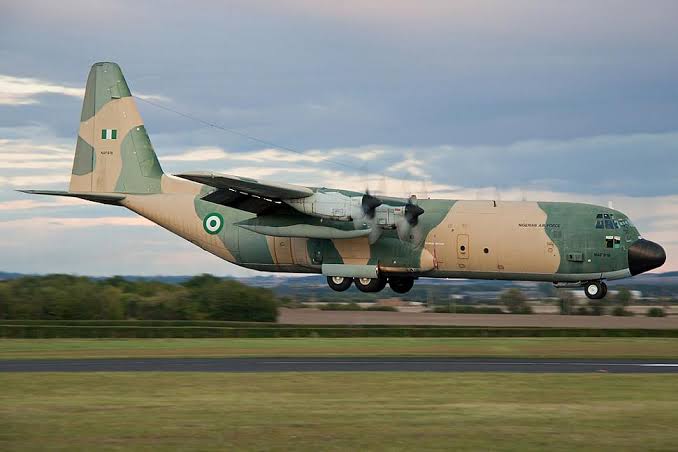

Air Marshal Abubakar disclosed that the completion and subsequent commissioning of 2.8 km road infrastructure, which he highlighted was executed through direct labour by the NAF Directorate of Services, was one among many other welfare projects earmarked for Kainji. He stated that during his last tour round the Base, he observed the deplorable state of the road network and believed the Unit deserved better considering its importance to the NAF’s Air Power projection capability. He added that the completed road network as well as other ongoing projects would enable personnel of the Unit discharge their respective duties conveniently, thus translating to enhanced operational performance. The CAS further noted that the Base was also being positioned to efficiently support the A-29 Super Turcano aircraft when it arrives. “I can assure you that this robust infrastructural development would continue to take place in NAF Base Kainji”, he said.

Air Marshal Abubakar expressed his profound appreciation to the Commander-in-Chief of the Armed Forces, President Muhammadu Buhari, for his gracious support to the NAF. He equally thanked the National Assembly, especially the Senate and House Committees on Defence and Air Force, for their continued support to the Service. While thanking the host community for the peaceful co-existence as well as their support to the NAF, the CAS promised that the Service would not rest on its oars until 407 ACTG, which is tasked with the important responsibility of training fighter pilots for the NAF, becomes a model Base.
Earlier in his welcome address, the Air Officer Commanding Air Training Command (AOC ATC), Air Vice Marshal Musa Muktar, who was represented by the Chief of Staff ATC, Air Commodore Abraham Adole, remarked that the commissioning of the reactivated aircraft and the welfare projects were inspiring demonstrations of a leadership whose top priority is to enhance NAF operations and promote morale of personnel through the provision of adequate platforms and enabling environment for effective service delivery. He noted that this would undoubtedly boost the NAF’s efforts in stemming the scourge of criminality bedeviling the Nation. While thanking the CAS for his commitment to the provision of infrastructure that would enhance personnel comfort and professional performance across the spectrum of NAF operations, the AOC pledged the commitment of the ATC as well as 407 ACTG to continue to do more to ensure the security of Nigeria and Nigerians.
After the unveiling of NAF 455 and inspection of the upgraded avionics in the cockpit, a Functional Check Flight (FCF) was conducted to further certify the aircraft fit for combat operations. The FCF, which also featured an exhilarating aerial display, was skillfully executed by the Commander 407 ACTG, Squadron Leader Kingsley Igwegbe, and Flying Officer Kafayat Sanni, the NAF’s first female fighter pilot, whose arrival from the flight was heralded by a traditional water salute. Present at the colourful event was the Emir of Borgu Kingdom, His Royal Highness, Barrister Muhammad Haliru Dantoro Kitoro IV, who commissioned the 2.8 Km Road Project and Technicians’ Crew Room. Other dignitaries included Branch Chiefs and Directors from Headquarters NAF as well as Commanders of Military Units and Heads of Para-Military Agencies in Kainji.
Boeing Announces Key Organization, Leadership Changes

CHICAGO, April 21, 2020 announced key organization and leadership changes aimed at driving greater cross-company integration and continuous improvement; aligning enterprise services to current business conditions while increasing value; streamlining senior leadership roles and responsibilities; and preparing now for the post-pandemic industry footprint. The changes are effective May 1.
A newly formed group — Enterprise Operations, Finance & Strategy — will consolidate several important areas, bringing together teams responsible for manufacturing, supply chain and operations, finance, enterprise performance, strategy, enterprise services and administration. Led by Greg Smith, executive vice president, Enterprise Operations, and chief financial officer, this new global organization will embed operational excellence and consistent lean principles across Boeing and its supply chain, and restore production and supply chain health as Boeing and the broader aerospace industry recover from the COVID-19 pandemic.
Corporate Audit will join Smith’s new group and continue to report directly to the Boeing Board of Directors Audit Committee as it does today, providing independent, objective assurance and advisory services to improve company operations.

Jenette Ramos, senior vice president of Manufacturing, Supply Chain & Operations, will bring 34 years of Boeing experience, leadership and operational skills to a special assignment in support of Smith and Boeing President and CEO David Calhoun.
The company also is combining its legal and core compliance programs, including global trade controls, ethics and business conduct, into a single organization led by Brett Gerry, chief legal officer and executive vice president of Global Compliance. This approach will enhance Boeing’s already strong compliance and internal governance program through focused accountability for, and a more integrated approach to, Boeing compliance responsibilities. It also will help the company proactively address new legal and compliance obligations arising from an increasingly complex global regulatory environment.
To accelerate this important work and to build on the existing strength of its compliance and ethics program, Boeing soon will name a chief compliance officer who will be responsible for leading the company’s compliance, ethics and trade control activities. This person will report to Gerry, with a direct reporting line to Calhoun and the board’s Audit Committee on compliance and ethics issues.
Finally, Boeing Government Operations, led by Executive Vice President Tim Keating, will assume responsibility for the company’s Global Spectrum Management activities, which ensure the safe, efficient and compliant use of radio frequency spectrum in Boeing products and operations.
“I am confident these changes will drive greater alignment among our functions; better equip our commercial, defense and space, and services businesses to deliver on customer commitments in a changing marketplace; and support our continuous efforts to develop talent through challenging leadership assignments,” said Calhoun. “Special thanks to Greg, Brett, Tim and Jenette for taking on new leadership responsibilities.”
Coinciding with these organization changes, Diana Sands, senior vice president of the Office of Internal Governance and Administration, has decided to retire from Boeing later this year after nearly 20 years with the company and following a thorough transition of responsibilities.
“Over the past two decades, Diana has played a key role in developing an industry-leading ethics and compliance program, served in several critical finance roles and been a strong advocate for advancing diversity and inclusion across the company,” said Calhoun. “The Boeing Board of Directors and I are deeply grateful for Diana’s leadership, integrity and dedicated service.”
Boeing is the world’s largest aerospace company and leading provider of commercial airplanes, defense, space and security systems, and global services. As a top U.S. exporter, the company supports commercial and government customers in more than 150 countries. Boeing employs more than 160,000 people worldwide and leverages the talents of a global supplier base. Building on a legacy of aerospace leadership, Boeing continues to lead in technology and innovation, deliver for its customers and invest in its people and future growth.
Airbus to produce 3D-printed hospital visors in fight against Covid-19

Getafe, 1 April 2020 – The majority of Airbus sites in Spain have joined forces to produce 3D printed visor frames, providing healthcare personnel with individual protection equipment in the fight against Covid-19.
More than twenty 3D printers are working day and night. Hundreds of visors have already been produced and dispatched to hospitals close to the Airbus facilities in Spain. Airbus leverages a patented design to manufacture the visor frames, using PLA plastics.

“One of the reasons I love my job is the capability we have for advanced design and quick manufacture. Overnight, we have gone from making aerospace concepts to medical equipment. This genuinely makes a difference in the fight against the pandemic and I couldn’t be prouder of our teams working day and night on this Airbus project,” said Alvaro Jara, Head of Airbus Protospace, in Getafe, Madrid.

Despite the pause of the majority of production at Airbus’ sites in Spain following the Royal Decree of 29 March, Airbus employees are allowed on site to continue with this essential activity.
In addition, Airbus in Germany also joined the project. The Airbus Protospace Germany and the Airbus Composite Technology Centre (CTC) in Stade, together with the 3D-printing network named “Mobility goes Additive,” are now supporting this project in Spain, also coordinating the collection and transport of visors to the Madrid region.
