
Tag Archives: Aviation Central
Aerospace and Defence Trade Show 2021 to be showcased at Lanseria International Airport

| Aerospace and Defence Trade Show 2021 to be showcased at Lanseria International Airport from 24th to 26th March |

The organisers of the AAD Expo are excited to announce a new event on their calendar, Aerospace and Defence Trade Show 2021 which will be hosted on 24 to 26 March 2021 at Lanseria International Airport (Lanseria). Leading up to Africa Aerospace and Defence Expo in September 2022, AAD continues to create platforms that will promote innovation and capabilities within the defence and aviation industry.
The Aerospace and Defence Tradeshow 2021 (ADTS 2021) is about exploring new paths, sharing solutions and showcasing innovation beyond Covid-19. Accessible to trade visitors only, the event will be industry focused and aptly emphasise industry capabilities and technologies that emanated from the challenges posed by the Covid pandemic. ADTS 2021 will include business to business meetings, onsite capability demonstrations for aircraft and UAVs and a conference. Parallel to the Lanseria event program, traders can also expect a fully-fledged display of Land forces innovation and capability demonstrations at the Gerotek Testing Facility. Located in the West area of Pretoria, Gerotek offers a variety of testing and capability demonstration set to marvel participants.

ADTS 2021 is set to bring together approximately 150 exhibitors consisting of 80% local industry and 20% international industry including the Defence and General Aviation industry, Airports, UAV/Drone operators, Security System Operators (Cybersecurity, Crowd Control, etc), Medical Supply Companies , Support and Logistic services to name but a few. This experience gives the South African and International defence and general aviation industries an opportunity to showcase their products and services, while also engaging in dialogue and discourse on what is pertinent to their industries.

“The hosting of AAD events, for the past 21 years, has made a significant contribution to the growing South African economy and that of its neighbouring countries through leveraging intellectual property into tangible products and export contracts. We will continue to create an enabling environment for dialogue in our sector. As one of our key mandates pronounces, it will remain our goal to bring together subject matter experts in thought leadership dialogues such as ADTS2021.” Said Sandile Ndlovu – Executive Chairman of AAD Expo.
The AAD Expo traditionally brings together a plethora of local and key international guests to explore and discuss opportunities on the African Continent. Through ADTS2021, AAD will entrench its position as an economic catalyst for the Defence and Aerospace industry.
About AAD
The Africa Aerospace and Defence (AAD) is Africa’s only aerospace and defence expo that combines both a trade exhibition and an air show. Held biennially in the City of Tshwane – South Africa’s administrative capital, the AAD Expo is one of South Africa’s largest contributors to the country’s GDP in show years, and is regarded as a national asset.

About Lanseria International Airport
Privatized in 1991 the airport is a secondary base for local carriers and services the general and commercial aviation business. Approximately 2.3 million passengers travel through the airport annually. Lanseria International has established itself as a niche-market boutique airport operating scheduled daily domestic routes between Johannesburg, Cape Town and Durban.


The airport is also the chosen international port of entry for overseas corporate and government aircraft visiting South Africa. The airport is conveniently located close to the northern suburbs of Johannesburg and Sandton business district with only 25 minutes of travel in either direction it also provides access to tourism hubs such as The Cradle of humankind, Sun City and the Hartbeespoort.

American Flying Classic’s Cherokee 235

One of many light aircraft come to mind that teaches a student to fly, but Piper itself brought out one of the many of its aircraft types, that being the Piper PA-28-235 Cherokee Charger. The first flight for this type of Cherokee was 14 January 1960 and over 32,778+ built.
For some years the aircraft was hangered at Rand Airport for some some years and eventually was brought back to live and put into the right hands of having this aircraft gracing South African skies once again!
The only Cherokee 235 based at Brakpan airfield East of Johannesburg, owned by the American Flying Classics Van der Schaar Family. The van der Schaar’s who are well known in the airshow circuit flying the Randolph sponsored Boeing Stearman. They also have a Pitts Special S2A and a couple of other flying toys in their inventory.
Ivan today is flying with Comair Limited as Captain on the Boeing 737-400 and 800 series aircraft, operating local British Airways and Kulula routes.


In 1963, the company introduced the even more powerful Cherokee 235 (PA-28-235), which competed favorably with the Cessna C182 for load-carrying capability. The Cherokee 235 featured a Lycoming O-540 engine de-rated to 235 horsepower (175 kW) and a longer wing which would eventually be used for the Cherokee Six. It included tip tanks of 17-gallon capacity each, bringing the total fuel capacity of the Cherokee 235 to 84 gallons. The aircraft had its fuselage stretched in 1973, giving much more leg room in the rear.

The stabilator area was increased, as well. In 1973, the marketing name was changed from “235” to “Charger”. In 1974, it was changed again to “Pathfinder”. Production of the Pathfinder continued until 1977. No 1978 models were built. In 1979, the aircraft was given the Piper tapered wing and the name was changed again, this time to Dakota.
The Cherokee featured a Lycoming O-540 engine de-rated to 235 horsepower (175 kW) and a longer wing which would eventually be used for the Cherokee Six. It included tip tanks of 17-gallon capacity each, bringing the total fuel capacity of the Cherokee 235 to 84 gallons.


For more information contact: Ivan van der Schaar: 082 375 9180 or Sonica van der Schaar: 082 682 2825
Children’s Flight 2020

On the 6th of November 2020 an army of aviators descended upon Orient
Airfield just outside of Magaliesburg. Their mission was to give 30 children,
from different charities, a Willy Wonka like experience through aviation.


The flying program commenced at 08:30 with a paradrop from the Atlas Angel. This was followed by the children getting individual flips in fixed wing aircraft. These aircraft included many Van’s RV variants, a Cessna 140, FK9, Sling 4, Navion, Mushshak and more.


The fixed wing flips took a pause at 11:00 as the rumble of Pratt and Whitney radials was heard. Soon the 4-ship Puma Energy Flying Lions came roaring overhead. The children were treated to a fantastic display by Scully Levin, Ellis Levin, Arnie Meneghelli and Sean Thackwray.


After the last children had enjoyed their fixed wing flights, the rotary wing flips begun. The 2 Alouettes flown by Charles Fuller and Rob Osner made light work of the Orient Circuit.


Whilst the flips were being flown, the children also competed in a color in competition and a balsa wood glider building competition. The two winners got a flip in a glider after the fixed wing and rotary wing flips. This means that two of the children experienced fixed wing powered flight, rotary wing flight and glider flight all in their first ever day of flying!

The two lucky children that won a glider flight were: Romy Dekoker – color in competition and Bontle Ipeleng – balsa glider competition.
This year has changed aviation as we know it. Events like the Children’s Flight especially have been forced to adapt. Although only 30 children got to experience the magic of flight this year, the success of the event is undoubted.
This success however could not have been possible without each and every sponsor that opened their hearts and wallets towards the event. This ranges from all the companies that helped with donations, the private individuals that all donated as well as everyone that took part in the raffle to fly with some of South Africa’s top pilots.
The pilots that made up the huge Children’s Flight Squadron were:
Nigel Hopkins – RV8
Patrick Davidson – RV7
Trevor Warner – RV7
Elton Bondi – C140
Derek Hopkins – RV7
Johan van Solms – RV7
Grant Timms – Mushak
Charles Fuller – Alouette II
Rob Osner Alouette III
Daniel Ralefeta – FK9
Goitse Diale – Sling 4
Ryan Beeton – RV7
Scully Levin – Flying Lions
Arnie Meneghelli – Flying Lions
Ellis Levin – Flying LionsSean Thackwray – Flying Lions
Karl van Seyldlitz – SF25
Arjan Schaap – Navion
Tokkie Botes – Bell 206
Riaan Denner – SF25
Clyde Strachan – Beechcraft Baron
And lastly, the group that brought it all together, Felix Gosher and his
organizing team. Felix is an incredible person that does wonders through his different aviation initiatives like the Children’s Flight, Elders Flight and more recently, the COVID Flight and Repat Flight.


We get so used to thinking of aviation as a means of transport or form of entertainment. It is events like these that truly makes one realize what aviation really is. Aviation is magic and the joy it can bring people is priceless. No photos or videos can suffice in capturing the joy aviation has brought these
children.


Browse our event gallery:


The Day The Lions Roared Over Heidelberg!

Photographs and text by Jessica Bezuidenhout
f you are any kind of an aviation lover you will immediately recognize the powerful sound of a Harvard’s radial engine in the skies. And when the early morning skies are filled with that sound you rush out and to find the flying lions above your house and on your doorstep, well you make a plan pretty quick to get to the airfield. Along with a Pitts special and two extras, the rumbles that trembles the earth when close by.


Heidelberg airfield in Gauteng was unexpectedly blessed with appearance of the living legends of the flying lions for two days in a row. From the air whizzing by and from up close it was worthy of more than a few goose bumps. Both days the weather was clear and hot making for some sizzling pics.


With only a few spectators around and clear air space ,the Flying Lions ,along with aviation photographer Justin de Reuck, could focus on their moves with ease and made my day by filling it with their sounds and giving me the chance for some exclusive photos. Up close and majestic ,the Harvard’s carry a presence bringing immediate respect. The pilots all legends in themselves.


Friendly and willing to share and just enjoy flying. The pilots – in no specific order- Scully Levin -Harvard-ZU-AYS Ellis Levin-Extra 300L-ZS-PWL Sean Thackwray and Grant Timms -Harvard-ZU-BMC Rodney Chinn and Justin de Reuck-ZU-BEU Arnie Meneghelli-Extra 300-ZS-EOE.


The purpose of the photoshoot was to capture the new sequence between the Puma Flying Lions Harvard’s and two Extra 300s for the upcoming airshow season in 2021.

Saab strengthens ties to Quebec and Canada through CRIAQ partnership

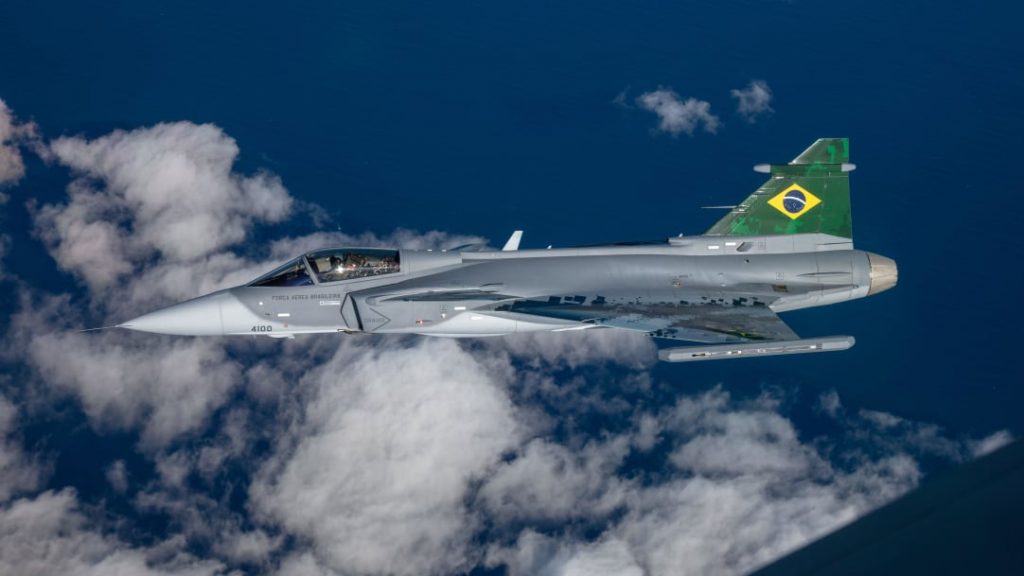
This collaborative relationship aims to leverage Quebec’s R&D ecosystem’s strengths to encourage the development of collaborative research projects between Saab and Canadian industry, as well as universities and research organizations.
This collaboration has been formed to support Saab’s future Industrial and Technological Benefit (ITB) commitments, if the Gripen fighter is selected for Canada’s Future Fighter Capability Project (FFCP).

“The quality and breadth of aerospace research and innovation in Canada is globally recognised, with the Quebec region home to many excellent companies and institutions. Therefore, it was natural to reach this agreement with an important organisation like CRIAQ. We look forward to working together to benefit research and the fostering of talent in Quebec,” said Jonas Hjelm, Senior Vice President and Saab’s Head of business area Aeronautics.
“During such unsure times within the industry, this partnership demonstrates that the aerospace industry in Quebec and Canada remains attractive and world class. We are very pleased with this signing as we continue to develop our aerospace industry, adding a new global player to our ecosystem. I am convinced that CRIAQ’s academic, industrial and SME community, and the Quebec economy as well, will clearly benefit from this international collaboration,” said Alain Aubertin, CEO of CRIAQ.

The ITB Policy is the government’s main tool for leveraging procurement to create jobs and economic growth in Canada. Saab has submitted an offer of 88 Gripen E fighters for the Canadian FFCP, and a core element of the Gripen industrial offering includes CAE in Montreal, Quebec who will supply training and mission systems solutions.
C-390 Millennium receives Aviation Week Grand Laureate in the Defense Segment

São Paulo, Brazil, October 19, 2020 – The Embraer C-390 Millennium multi-mission aircraft, manufactured by Embraer, today received the Grand Laureate in the Defense Segment and the Laureate Award for the “Best New Product” in Defense from Aviation Week Network. The citation for the award reads, “The first C-390 tanker/transport, the largest and most sophisticated aircraft yet developed by Embraer, was delivered to the Brazilian Air Force in 2019.”
“To receive an award with as much prestige as the Laureate is a very significant acknowledgement of the exceptional work of all Embraer employees. This is a substantial recognition of the merits of our engineers and the ability of our workforce to execute the development of such an advanced product with excellence,” said Francisco Gomes Neto, Embraer S.A. President and CEO. “Embraer’s new business strategy seeks to increase revenue and profitability, and the C-390 Millennium plays an important role in solidifying the Company as a serious entrant in a new market segment.”

“We are honored to receive this award, which recognizes the excellence of our programs and of this aircraft, which was developed to set new standards in its class, bringing exceptional performance complemented by the lowest life-cycle cost in the market,” said Jackson Schneider, President and CEO of Embraer Defense & Security. “The C-390 Millennium offers greater flexibility and value to operators performing air transport and air mobility missions, among others.”
The Aviation Week Laureates Awards recognize the extraordinary achievements and innovative personalities that represent the values and vision of the global aerospace community. Programs honored with Laureates Awards have changed the way people work and move around the world. Aviation Week continues to recognize the very best accomplishments in the four pillars of our industry: Defense, Commercial Aviation, Space, and Business Aviation.

In 2009, the Brazilian Air Force (FAB) contracted Embraer to design, develop, and manufacture the C-390 Millennium aircraft as a replacement for its aging C-130 fleet. Deliveries to FAB started in September 2019. The C-390, which was recently ordered by the Portuguese Government, is a new generation multi-mission transport aircraft that offers unrivaled mobility, fast reconfiguration, high availability, and enhanced flight safety, all on a single, exclusive platform.


The aircraft can perform a variety of missions, such as cargo and troop transport, cargo and paratrooper airdrop, aerial refueling, search and rescue, aerial firefighting, medical evacuation, and humanitarian missions.
Flying faster and delivering more value, the Millennium is the right sized platform for major airlift deployment scenarios. Minimized intervals and on condition maintenance, combined with highly reliable systems and components, reduce downtime and costs, contributing to outstanding availability levels and low life cycle costs.

The C-390 benefits from a modern fly-by-wire flight control system with integrated technology that lowers the workload of the crew and increases the safety of its operation. Furthermore, the aircraft can refuel other aircraft in flight, with the installation of removable internal fuel tanks. The aircraft can also be refueled in flight, thus providing greater flexibility for longer missions. An advanced self-defense system increases the aircraft’s survival capability in hostile environments.

Equipped with two International Aero Engines V2500 turbofan engines, the latest avionics, a rear ramp, and an advanced cargo handling system, the C-390 is capable of carrying up to 26 metric tons of cargo at a maximum speed of 470 knots (870 km/h), with ability to operate in austere environments, including unpaved or damaged runways. The aircraft can carry troops, pallets, armored wheeled vehicles, and helicopters.

Aviation industry tests a key solution to fly seamlessly and with more efficiency in Europe

- The COVID crisis underpins the urgency for Europe’s aviation industry to push ahead with delivering the future Digital European Sky, and building a smarter, more sustainable and resilient system in the long term.
- An essential component of the future system is ground-to-ground interoperability, a solution designed to enable the swift and seamless exchange of flight trajectory information in real time between Europe’s network of 63 air traffic control centres.
Europe’s aviation industry has completed the final test of a new SESAR Solution on ground-to-ground interoperability, which is designed to allow the network of 63 European en-route control centres to exchange information on the flight trajectories in real time, thus supporting seamless operations and improving flight efficiency.

This milestone has been reached at a time of unprecedented crisis, due to the COVID pandemic, which is compelling the industry to push ahead with delivering the future Digital European Sky, in support of a smarter and more sustainable recovery in the long term.
Air navigation service providers in Germany (DFS), France (DSNA), Spain (ENAIRE), Italy (ENAV) and EUROCONTROL’s Maastricht Upper Area Control Centre (MUAC), together with the technology provider manufacturing industries Indra, Leonardo and Thales, have worked together on its development, within the context of the SESAR Joint Undertaking research and innovation programme (SESAR 2020).
This solution addresses a frequent problem that affects Europe’s air traffic, whereby flights crossing borders or different airspace sectors have to adjust their trajectory or speed to avoid conflicts with other aircraft. The problem is caused largely by en-route control centres sharing information in a sequential way and updating the trajectory information.
To address this situation the SESAR JU ‘4DTM’ ground-to-ground interoperability (IOP) project, coordinated by Indra, has developed a solution that allows the sharing of information in real time.

With this solution, control centres involved in the management of a flight can share reliable, complete and updated flight trajectory information from take-off to landing, taking into account any existing and shared internal restrictions in the airspaces that the flight will cross.
Final tests of this solution – following the first trials successfully held in April 2019 – took place last June during two weeks in an environment simulating the operations of the Maastricht UAC, Reims UAC, Karlsruhe UAC, Geneva and Zurich UACs, Padua and Milan UACs.

Thanks to the IOP solution, all actions carried out in one centre are immediately visible in all other centres, removing any uncertainty over the conditions under which a flight would enter another airspace.
The end goal is to attain a smoother control process, which will improve the efficiency of air traffic control in Europe and make it possible to manage more flights with greater precision and punctuality, offering cost savings to airlines, reductions in CO2 emissions and ultimately providing a better service for passengers.

The solution will also help carry out the ATC process “quietly”, without the need for the air traffic controller to coordinate with his/her counterparts in adjacent centres by phone. For this purpose, and implementing the “flight object” concept, all control centres share the same information and have the possibility to request changes to flight trajectories in real time.
Some use cases on which the solution was tested:
- Changes in flight level requested by the aircraft in order to avoid storms Route changes requested by the aircraft in order to shorten route
- Real-time updates on the information regarding a particular flight trajectory by using the Flight Object data
- Flexible flight transfer procedures between control centres
- Flight management coordination between centres
- What-if mechanism to preview and negotiate changes
IOP is the enabling ground-ground communication technology and protocols for seamless flight operation across regions and national boundaries, and underpins the 4D flight trajectory with the real-time sharing of the trajectory among all the ATM actors
The results of these tests will be released at the end of this year, and will be used to update the ED133 standard developed by the European Organisation for Civil Aviation Equipment (EUROCAE), which will support subsequent industrialisation and implementation.
Scalable Agile Beam Radar (SABR) upgrades continue for US Guard, reserve and active-duty fighters

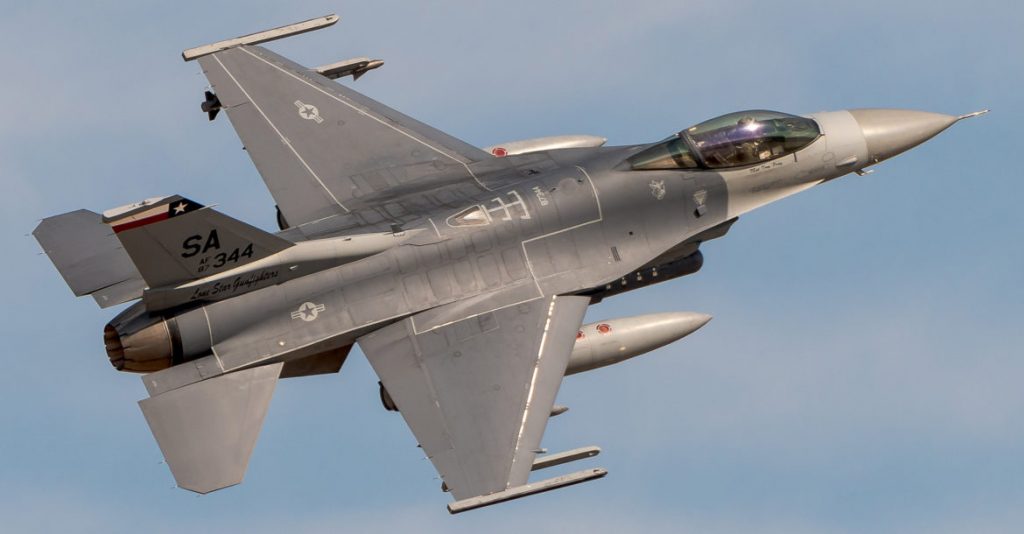
BALTIMORE – Oct. 15, 2020 – The U.S. Air Force has met Full Operational Capability (FOC) readiness for Northrop Grumman Corporation’s (NYSE: NOC) AN/APG-83 SABR active electronically scanned array (AESA) radar on Air National Guard F-16s to meet a U.S. Northern Command Joint Emergent Operational Need (JEON) for homeland defense.
On Sept. 7, the U.S. Air Force began installation of APG-83 radars on Air National Guard F-16s at Joe Foss Field, Sioux Falls, South Dakota, the fourth U.S. Air Force base to receive AN/APG-83 SABR AESA radar upgrades.

The radar upgrade of Air National Guard F-16s extends the operational viability and reliability of the fleet while providing pilots with 5th-generation fighter radar capabilities to defend our nation’s airspace.
“SABR enables F-16 pilots to detect, track, identify and target a greater number of threats faster and at longer ranges from outside the threat envelope,” said Mark Rossi, director, SABR programs, Northrop Grumman. “This upgrade will keep the multirole F-16 fighter relevant and capable for decades to come.”

The AN/APG-83 features all-weather, high-resolution synthetic aperture radar mapping to present the pilot with a large surface image for more precise target identification and strike compared to legacy systems. Its design incorporates proven hardware and advanced operating modes from Northrop Grumman’s fifth-generation F-35 and F-22 AESA radars. The high degree of commonality and shared manufacturing processes and infrastructure drives efficiencies and affordability improvements across all of Northrop Grumman’s AESA radar programs.
The AN/APG-83 AESA is now an official program of record for both the active and reserve U.S. Air Force as well as the Guard after the service procured units in February for Air Combat Command and Air Force Reserve F-16 aircraft.
Northrop Grumman solves the toughest problems in space, aeronautics, defense and cyberspace to meet the ever evolving needs of our customers worldwide. Our 90,000 employees define possible every day using science, technology and engineering to create and deliver advanced systems, products and services.
Joe Ford joins Draken International as Chief Executive Officer

Las Vegas, NV – The Board of Directors of Draken International, LLC has elected Joseph “Joe”Ford as Chief Executive Officer, effective immediately. Ford will also serve as a member of the company’s Board of Directors.

Ford previously served as President, DynAviation at DynCorp International. At DynAviation, Ford was responsible for all aspects of the segment’s profit and loss performance with functions including operations, supply chain management, finance, quality assurance, human resources, contracts and internal and external business development.

Ford will succeed Jared Isaacman who has served as Draken’s Founder and Chief Executive Officer since 2011. Isaacman will become the non-executive Chairman of the Board of Directors and will assist Ford through the transition.

“During a period of tremendous growth for our company and the commercial adversary air industry, there is no better person to lead Draken International,” stated Isaacman. “After serving
his country with distinction for 25 years and growing defense companies that support the U.S. military, Joe has the leadership, strategic vision and record of execution to fly Draken to new heights. His insight for how to apply modernization to our comprehensive fleet of fighters will prove beneficial and is exactly what Draken needs as the company enters its next
chapter of expanded growth.”
“I am beyond thrilled to join the Draken family,” stated Ford. “I understand the need to provide the U.S. military aviation community with the readiness it needs while making every taxpayer dollar go further. Draken is the best in the business and I am honored to have Jared and the Board’s support as we remain focused on supporting our nation’s military aviators every day.”
Before his career in the private sector, Ford had a distinguished military career, retiring from the U.S. Air Force as a Colonel in January of 2007 as the commander of the 401st Air Expeditionary Wing at Aviano Air Base, Italy.
Other roles during his military career include commander of the
18th Operations Group at Kadena Air Base, Japan and commander of the 35th Fighter Squadron at Kunsan Air Base, South Korea. Mr. Ford is a combat veteran with four fighter deployments to
the Middle East. His aviation career includes over 4,000 hours in aircraft including the F-4C/D,A-7D, F- 117, F-16A/B/C/D, F-15C/D, HH-60, E-3 and KC-135R.

“Draken is the kind of mission driven company with which we like to partner,” said Todd Hirsch, Senior Managing Director at Blackstone Tactical Opportunities and a member of the company’s board. “A decade ago, Draken was an idea – that commercial adversary air support
can improve readiness and reduce sustainment and training costs for the U.S. Armed Forces.
Today, Draken is the industry’s leading provider of military aviation readiness training,completing over 20,000 flight hours with a fleet of more than 100 mission capable aircraft.

Under Joe’s leadership, it will continue to set the standard in airborne adversary support, flight training, threat simulation, electronic warfare support, research, testing, as well as other missions
uniquely suited to their fleet of aircraft.” Hirsch continued: “On behalf of the rest of the board and all our employees, we thank Jared for
creating this industry leading firm and guiding it so well. We are grateful to continue to have him as a partner.”

The board also elected Bill “Sweet” Tart as Chief Operating Officer. Sweet joins Draken from DynAviation where he was Senior Vice President, Business Development. Prior to his private sector career, Sweet served in the United States Air Force for 25 years, retiring in 2014 as the Director of the Remotely Piloted Aircraft Division at the Pentagon. He previously served as the commander of the 432nd Operations/Expeditionary Operations Group at Creech Air Force Base, Nevada and the senior military assistant to the Assistant Secretary of Defense for Legislative Affairs. Sweet is a Risner Trophy winner for outstanding performance at USAF Weapons
School.


Draken International is the world’s largest operator of ex-military aircraft. With over 100 tactical fighter aircraft incorporating modern 4th generation capabilities, the company is the partner of choice to support the growing global demand for commercial air services. Draken
employs world class, military trained fighter pilots including USAF Weapons School Instructors,Fighter Weapons School Graduates, TOP GUN Instructors, Air Liaison Officers, and FAC-A Instructors. In 2019, funds affiliated with Blackstone Tactical Opportunities completed a strategic investment into Draken International to facilitate the next phase of modernization and growth.
Aero Club Celebrates a Centenary of Recreational Flight

By Rob Jonkers
There is a sense of achievement on reaching a Century, on all manner of occasions it calls for a celebration, subject for congratulations on the significance and justifiable pride, the past century of the existence of the Aero Club of South Africa has been integral in seeing the growth in Recreational Aviation, the collective of the various disciplines
that make up flying for fun, that have allowed the freedom of development in the achievement of products, ideas, adventures, competitions that are existential of this magical world that is recreational flight.

This journey has been long, sometimes tedious and difficult but the persistence and passion of our members across the century has made it possible for the Aero Club to be the success it is today. One of the many great benefits and joys of living since the 20th Century is that we have had the immeasurable privilege to be able to fly, as since the dawn of mankind we have aspired to the ease and freedom of flight that only birds could enjoy, and from those early 20th Century years mankind learned to fly!

On the 10 th October 2020, after many months after postponement since C-19 made us all go into hiding, the Aero Club’s official Centenary Balloon Launch took place at Bill Harrop’s Balloon Safaris in the Magalies Valley. The weather outlook also looked great, and the launch event was a go sent out by the organisers just after 5 am. The wind started picking up somewhat, and first off the ground were the three commercial balloons that occurred at 6am, thereafter the Aero Club Balloon which was rebuilt in Aero Club Centenary colours (carrying the registration ZS- HOI as the ex Capital Radio balloon) was unfurled and prepared for a tethered inflation and launch.

Chairman of BAFSA Richard Bovell who was also this Centenary event organiser was the first pilot supported by student pilot Sema Mathebula, got the balloon off the ground in somewhat gusty conditions, the wind at that stage would not have been favourable to actually fly. Hanke Fourie took over from Richard for a second tethered stint, giving a good photographic opportunity for the guests in attendance.

After the balloon landed and was furled up again, the guests were treated to a scrumptious breakfast, as only one can experience as an early morning African sunrise breakfast in the bush. As MC for the event Richard Bovell gave a short speech on a brief history of sport ballooning in South Africa, thanked the guests for their attendance, and handed over the very first Aero Club Centenary Yearbook which is hot off the presses to the Doyen of Ballooning in South Africa Terry Adams, who since his arrival in SA in 1976 established the mainstay of balloon manufacturing
and pilot training in SA.

Thereafter Rob Jonkers as the Chair of the Aero Club thanked BAFSA and their team of hosting this one of a kind event, and the only event marking the Aero Club’s Centenary that will take place in 2020. A ceremonial Centenary cake cutting was then carried out by the Aero Club’s Executive Committee, Rob Jonkers (Chairman), Marthinus Potgieter (Vice-Chairman), John Gaillard (Hon Treasurer) and Hanke Fourie (Exco Member).


Although the year 2020 will go down in history as a great disrupter and has essentially rained on our Centenary parade, we will be looking at recovering much of the planned events in 2021 as time and resources will allow to bring justice to our 100 year heritage, especially poignant is to hold a 100 aircraft of all types flypast ( 101 also looks like a good number…) and an all Recreational Aviation Airweek as was initially planned for this year at Middelburg.


The Centenary coffee table book, which is now available for sale (details on the Aero Club website), is a compendium of each of our flying disciplines, historic and contemporary with numerous personalities with some
remarkable stories in recreational flying as a celebration for this signature Centenary Year.